 Elad Gil
天使投资人
Elad Gil
天使投资人
Arm moved from IP licensing into physical silicon with the Arm AGI CPU after Meta sought a general-purpose agentic CPU no one else could provide. AI reaches 80% to 90% of engineers, while Arm’s documentation and test benches may make proprietary IP more trainable; supply may remain constrained for 3 to 5 years, with data-center construction a possible next bottleneck.
 Sam Altman
OpenAI
Sam Altman
OpenAI
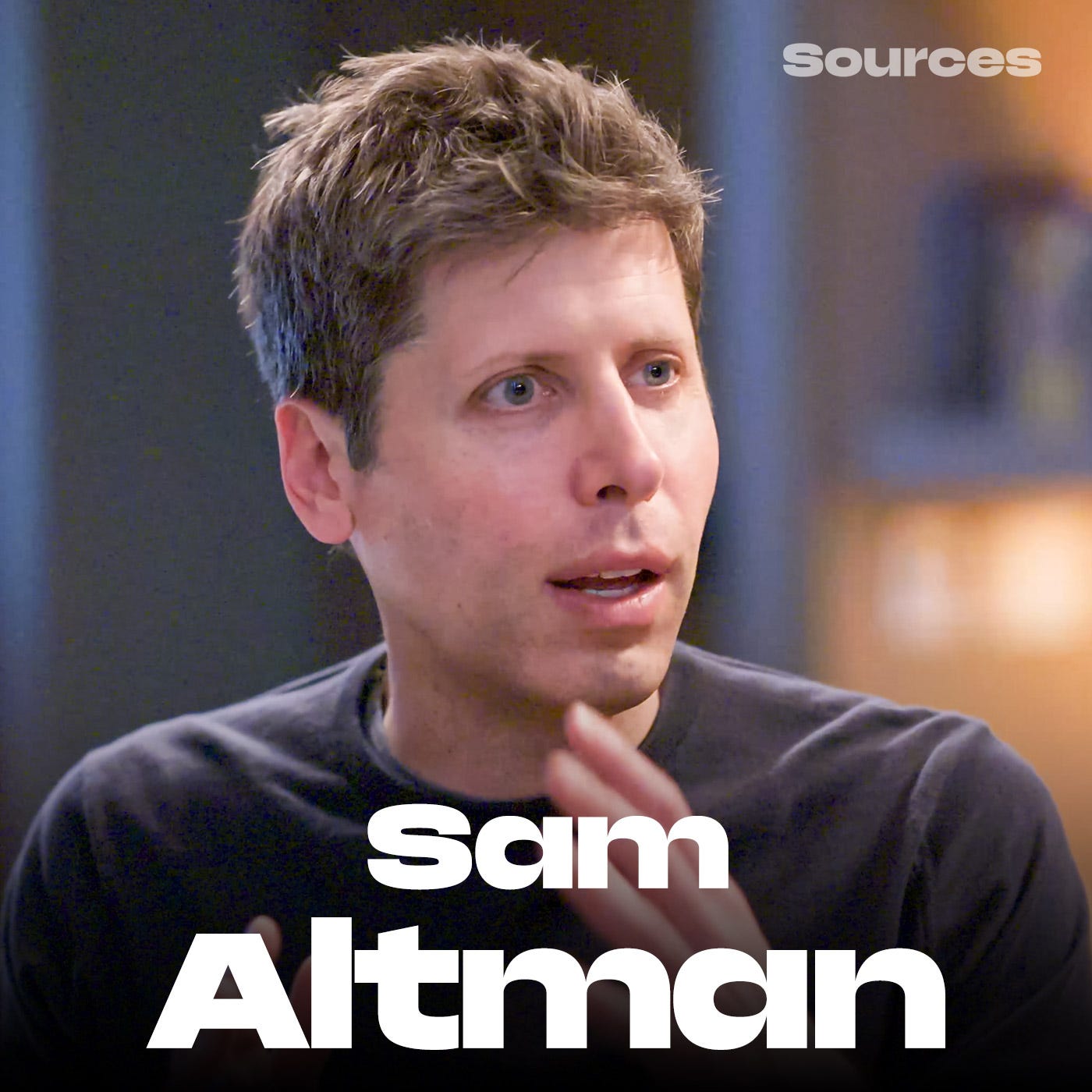
OpenAI delayed a frontier RL training run after converging alignment signals and the Hugging Face incident shifted risk from deployment toward model training and production. Altman says enterprise revenue has surpassed consumer revenue and more models are ready, but the safety-driven slowdown, compute commitments, and a potentially faster RSI trajectory could make IPO timing strategically consequential.
Sarah Guo
Conviction
Sarah Guo says competitive open-source AI is already widespread, so US restrictions could handicap law-abiding American businesses while adversaries ignore them. Her roughly 250-person network sees recursive self-improvement and “some sort of exponential intelligence” as a one-to-two-year possibility, while Sunday Robotics targets home-robot beta by year-end. Compute independence, regulation, and physical supply chains remain constraints, while Chai Discovery’s $10 million contract and customer adoption test AI’s ability to capture value in biology.
 Eric Schmidt
SCSP
Eric Schmidt
SCSP
Biotech’s 80% XBI rally is structurally M&A-led, with roughly $138B announced against $59B of equity issuance, compressing premiums and leaving no preclinical IPOs. Moderna’s melanoma vaccine suggests a durable trade-secret franchise, while BioNTech’s colorectal failure leaves tumor context unresolved; daraxonrasib’s $478K price and frontline label, and ivonescimab’s HARMONi-3 in 6–9 months, set the key monitoring points.
 Ben Horowitz
a16z
Ben Horowitz
a16z
a16z’s new AI infrastructure fund captures a founder migration into hardware, with top-founder hardware pitches rising from roughly 3–5% to “north of 20% or 30%.” Hyperscaler capex, booked-out GPUs and resale premiums support opportunities across chips, power and cooling, while grid shortages, regulation and uncontrolled agent spending remain constraints.
Martin Casado
a16z
Cursor’s interface-over-model thesis challenged Microsoft’s Copilot despite its VS Code, OpenAI weights, 100 million developers, and enterprise distribution. Rejecting a $25–50M ARR self-serve ceiling, it built enterprise sales reaching over 50% of the Fortune 500, where margins matter; its IDE-to-agent-to-model shift still faces model releases such as Opus 4.5 and an unnamed acquirer’s potential compute-distribution-data fit.
Discover Frontier Pioneers
Perspectives & VC
20 epsElad Gil
Perspectives & VC
20 epsSarah Guo
Foundations
6 epsSam Altman
Perspectives & VC
20 epsBen Horowitz
Applications & Agents
18 epsEric Schmidt
Perspectives & VC
19 epsMartin Casado
 Applications & Agents
20 eps
Applications & Agents
20 epsswyx
 Applications & Agents
20 eps
Applications & Agents
20 epsLukas Biewald
 Perspectives & VC
20 eps
Perspectives & VC
20 epsBrad Gerstner
 Compute & Systems
9 eps
Compute & Systems
9 epsElon Musk
 Pioneers & Science
5 eps
Pioneers & Science
5 epsFei-Fei Li
 Compute & Systems
9 eps
Compute & Systems
9 epsJensen Huang
 Perspectives & VC
16 eps
Perspectives & VC
16 epsMarc Andreessen
 Applications & Agents
4 eps
Applications & Agents
4 epsAravind Srinivas
 Foundations
7 eps
Foundations
7 epsSatya Nadella
 Compute & Systems
4 eps
Compute & Systems
4 epsMark Zuckerberg
 Perspectives & VC
17 eps
Perspectives & VC
17 epsBill Gurley
 Applications & Agents
5 eps
Applications & Agents
5 epsAmjad Masad
 Foundations
5 eps
Foundations
5 epsDemis Hassabis
 Pioneers & Science
2 eps
Pioneers & Science
2 epsAndrej Karpathy
 Foundations
2 eps
Foundations
2 epsDario Amodei
 Foundations
1 eps
Foundations
1 epsIlya Sutskever
 Perspectives & VC
2 eps
Perspectives & VC
2 epsNat Friedman
 Compute & Systems
1 eps
Compute & Systems
1 eps