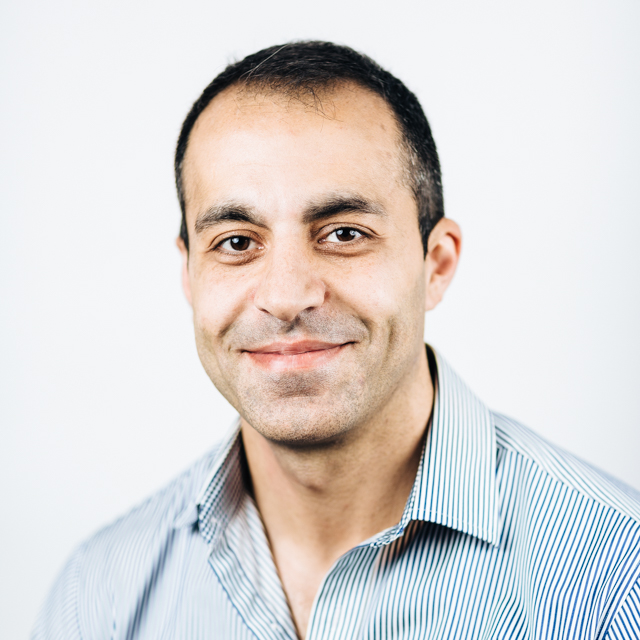
Ali Ghodsi
Frontier Insights
Frontier Thesis: Useful AGI exists today, rapidly commoditizing foundation models. Lasting enterprise value resides exclusively in proprietary data, workflows, governance, and applications capable of capturing trillions in service-sector spend.
Strategic Decisions: Overcame the open-source monetization trap by shifting from Spark into proprietary enterprise software, executing disciplined distribution partnerships, and enforcing strict, product-first M&A over artificial revenue acquisition—anchored by early founder alignment and refusing premature buyout exits.
Risks & Warnings: Value capture remains unproven: agentic AI failures, uncertain revenue attribution, and unvalidated proactive teammates threaten enterprise ROI if models fail to reliably displace professional services.
Key Views & Dialogues
AI Enterprise - Databricks & Glean | BG2 Guest Interview
- 🗓️ Date:
2025-12-23| 🎙️ Show:BG2
Ali Ghodsi argues that AGI already exists and LLMs are commodities, shifting durable value toward proprietary data, business processes, and applications rather than model providers. The 95% project-failure rate reflects healthy experimentation, but frozen models and computer use remain unresolved; enterprise adoption, agent revenue, and Glean’s move toward a proactive personal work companion are the catalysts to monitor amid a clear startup bubble.
View Dialogue Notes & Key Takeaways
Ali Ghodsi’s central claim: “I think we have AGI. We really have it” — by the definition his 2009 Berkeley AMP Lab used, it’s already satisfied, and the industry is just “moving the goalpost.” He sorts the field into three camps: the superintelligence quest (frontier labs, most of the capital, “I would be very worried there”), the Turing-Award researchers (Sutton, LeCun — sober, 20 years out, “probably the ones that are right, unfortunately”), and camp three — Databricks and Glean — extracting economic value from the AGI we already have.
“The LLM is a commodity” — interchangeable like gas stations, “just compare price,” with users switching models in a day unlike any prior platform battle. Model companies can still be valuable (“TSMC is very valuable”) but as fabs; the real moat is proprietary data and business process — “there’s not an AI out there that understands your secret sauce and your data. That’s not a commodity.”
On the capex math — ~$250B to Nvidia implying ~$500B capex needing ~$1T of AI revenue vs a $400B total software industry — Arvind Jain’s resolution: AI isn’t extending software, it’s converting services dollars, an industry “25 times larger than software.” Ali’s answer is camp-dependent: if superintelligence lands, “any of your cost equations pale in comparison”; camp three doesn’t need it.
Is there a bubble? Yes, but not binary: “there are startups with zero revenue worth 10, 20, 30 billion. That’s a bubble.” Yet both call OpenAI and Anthropic up over 12 months — ChatGPT and Gemini “on fire,” coding having “only eaten into a small portion of that market.”
Ali reframes the MIT 95%-failure stat as healthy: “that’s actually what you want” from an experimentation phase, and hopes for similar stats next year. The working 5%: RBC agents producing equity research notes 15 minutes after an earnings call vs a 2-hour industry standard, Merck’s “Teddy” transformer for gene-regulatory drug discovery, and 7-Eleven’s fully agent-automated marketing stack.
Value accrual call: Arvind thinks the intelligence layer stays thick — “maybe half of enterprise value” — while Ali says most value goes to apps, “I just don’t know which apps”, invoking 1998: everyone bet on Cisco routers and portals, the winners were Facebook/Airbnb/Uber. Software isn’t dead (Salesforce is “a full ecosystem of workflows,” not a database), but data entry is the wedge — “Zoom is really the perfect data entry application.”
Longs and shorts: Ali is long agents and speech (“as long as you’re using a keyboard, we haven’t nailed speech” — keyboards “basically going to disappear”), Arvind calls coding and customer-service automation “a little bit over hyped.” Brad is long proactive AI that comes to the user — the shift that takes “5% power users to 100%.” Glean, fresh off a $200M revenue run rate, is building toward a privileged personal work companion.
🔗 Original source & video: AI Enterprise - Databricks & Glean | BG2 Guest Interview
Ben Horowitz and Ali Ghodsi: How to Run a $100 Billion Business
- 🗓️ Date:
2025-10-15| 🎙️ Show:The a16z Show
Databricks escaped the open-source trap after PLG stalled at roughly $3 million ARR, adding proprietary software and enterprise sales. Its Microsoft partnership paired a portfolio gap with 60,000 sellers, while sacrificing “12 months of our roadmap” and surviving a deal that “died” around 10 times. Ali prioritizes people and integration over revenue, while reported $100 million AI offers remain uncertain.
View Dialogue Notes & Key Takeaways
Databricks escaped the classic open-source trap by recognizing that Apache Spark’s popularity was not a business model. Downloads and Spark Summit proved demand, but customers could still ask, “Why can’t I just download the open source version?” After PLG stalled at roughly $3 million ARR, the company added proprietary differentiation, hired experienced commercial leadership and went all-in on enterprise sales.
Ali Ghodsi’s operating system is aggressive self-education combined with direct access to ground truth. He advises founders to admit they are “zero,” interview the best practitioners, compare conflicting playbooks and hire people good enough to teach them. He and Ben Horowitz argue that CEOs must “fly low and fast,” because actual knowledge resides with customers and individual contributors—not neatly inside the executive staff or org chart.
High intensity scales through leadership, organizational design and visible impact—not hours alone. Ali sets the tone by working nights and weekends and vets candidates through backchannel references, but explicitly rejects burnout as the objective. Ben’s sharper point: no motivational speech can overcome a “three-legged race” of dependencies where employees know extra effort will not change the outcome.
The Microsoft partnership worked because a genuine product-for-distribution trade was reinforced by a painful commitment. Microsoft had a portfolio gap and roughly 60,000 sellers; Databricks had the product but would sacrifice “12 months of our roadmap” to integrate it. The team demanded a large pre-commit so someone inside Microsoft would care if it failed, then survived a deal that “died” around 10 times.
Databricks evaluates acquisitions in the reverse order of conventional corporate development: people, product integration, then financials. Ali wants founders who will build for five years and code bases that can become one product; buying revenue first may create two years of growth but ultimately leaves “a bag of crap that doesn’t work together.” Ben argues the hidden casualty is sales efficiency, because every separate architecture creates more specialists, support systems and customer friction.
A pivotal decision was rejecting an acquisition offer six times Databricks’ prior valuation. Ben acknowledged that selling would pay a16z handsomely, then framed the real cost as spending a lifetime wondering whether Ali had abandoned his “one shot.” The same ambition turned the seemingly absurd suggestion to add Databricks to FANG into a P95 engineering-compensation model—and preceded Ben’s 2019 prediction, at a $6 billion valuation, that the company would reach $100 billion.
Even at Databricks’ scale, the AI talent market cannot be treated as a pure bidding contest. Ali believes many reported $100 million offers are exaggerated by CEOs with incentives to reset compensation expectations; his counterweight is mentorship, learning and real ownership. He contrasts smaller startups with Databricks’ scale, citing a $100 billion valuation and 10,000 employees. He also stresses luck: starting in 2012 might have been too early, 2014 too late, while the actual 2013 start barely survived a frozen Series C market—“there’s a lot of randomness.”
🔗 Original source & video: Ben Horowitz and Ali Ghodsi: How to Run a $100 Billion Business