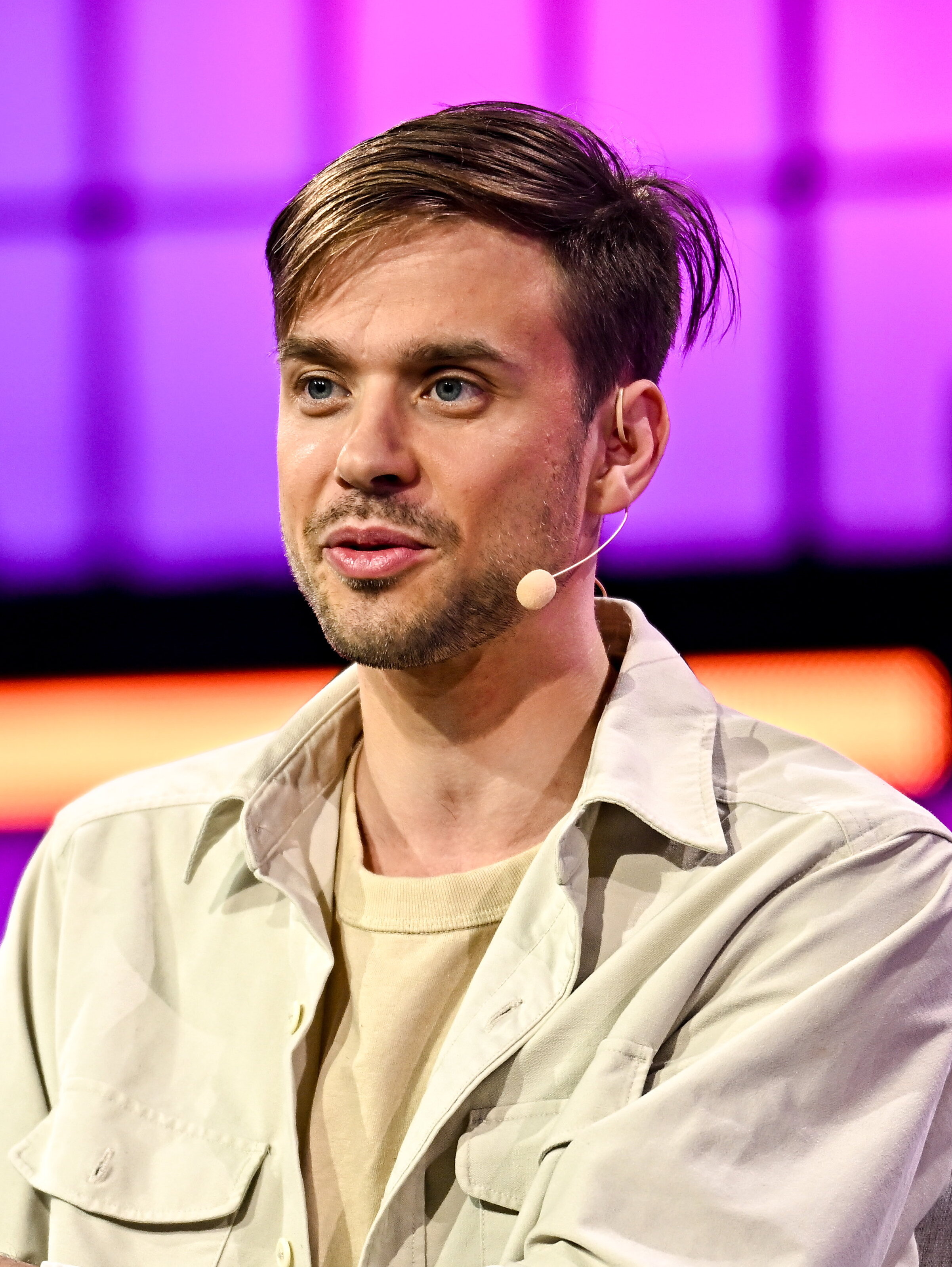
Anton Osika
Frontier Insights
Thesis: AI coding is shifting from lightweight prototypes to complex, production-grade applications, collapsing seat-based SaaS economics. Orchestration, security, and tight feedback loops—not raw model ownership—dictate platform power.
Strategy: Prioritize product velocity, talent, and brand over near-term token margins. Remain strictly model-agnostic, compress time-to-value to drive elite retention (~85% Day-30), and evolve into an end-to-end “AI co-founder” platform.
Risks: Margin cannibalization from model labs moving upstream; horizontal pushback from incumbent design tools (Figma); macro infrastructure bottlenecks (power/compute limits); and security vulnerabilities inherent in fully autonomous production deployments.
Key Views & Dialogues
Former Intel CEO on What Went Wrong, What’s Next + Lovable CEO on the Real Promise of Vibe Coding
- 🗓️ Date:
2026-07-15| 🎙️ Show:All-In
Pat Gelsinger attributes Intel’s decline to replacing technical leadership with spreadsheet-driven capital allocation, while Apple, Nvidia and TSMC compounded patient capability-building into durable platforms. The semiconductor recovery remains exposed to Taiwan’s energy dependence, even as AI’s long runway is constrained by electricity; Lovable meanwhile reports production-scale adoption, with defensibility shifting toward orchestration, security, operational data and user feedback.
View Dialogue Notes & Key Takeaways
Pat Gelsinger’s Intel postmortem is that the company stopped being run as a technology company, then reinforced that error through capital allocation. The five or six years before his 2001 return sent $100 billion to shareholders while Intel went a decade without building a factory and failed to buy EUV equipment. His rule: billion-dollar technical choices cannot be made “through a spreadsheet.”
Apple, Nvidia, and TSMC each beat Intel through patient capability-building rather than one miraculous bet. Steve Jobs quietly kept Apple’s operating system ready for x86 across four releases before integrating silicon and system design; Nvidia compounded CUDA until GPUs escaped graphics; TSMC standardized foundry access until it produced 5× Intel’s wafers in 2001 and roughly 7× now. Apple’s logic was not “you failed as a supplier,” but “I can supply myself better.”
Semiconductor resilience is improving, but Taiwan’s energy dependence leaves the global economy exposed to a blockade without a shot being fired. Gelsinger put U.S. leading-edge production at roughly 12% when the CHIPS Act began and 18% today, yet said Taiwan holds under three weeks of energy reserves and a shut fab takes 90 days to restart. A Taiwan brownout, he argued, would have an economic impact “greater than the Great Depression.”
Gelsinger sees AI as a multi-decade buildout whose natural cap is electricity, not demand for intelligence. Energy availability prevents unlimited speculative data-center construction, while the goal should be AI that is 10,000× better, cutting token cost and energy by five orders of magnitude so Jevons’ paradox expands usage. He expects “a couple of decades” of progress—but not a smooth curve.
High AI multiples may correct repeatedly without invalidating the underlying thesis, because these businesses already have real revenue and margins. Gelsinger welcomed periodic corrections and further “apocalypses” as safeguards against excess, then extended the opportunity into a “trinity of computing”: classical, AI, and quantum. He predicts meaningful quantum results before 2030, with encryption potentially solved around 2032–33.
Lovable’s numbers suggest vibe coding has crossed from prototyping into production and business operations. After 20 months it reported more than 50 million apps, one million new projects weekly, 700 million monthly application visits, and fastest growth in enterprise; Anton Osika also corrected Jason Calacanis’s $400 million revenue estimate with “We reached 500 in May.” Jason’s internal example compressed a formerly $500,000 intranet into roughly four to eight hours and under $2,000 in a year.
Lovable’s defensibility is shifting above any single foundation model toward orchestration, operational data, security, and accumulated feedback. It routes work among commercial frontier and open-weight models, post-trains on high-impact failures, and refuses cheaper intelligence when measurably worse for customers. Osika’s limiting factor is increasingly human judgment: models can produce sophisticated software immediately, but deciding “what is the right thing to build” improves more slowly.
🔗 Original source & video: Former Intel CEO on What Went Wrong, What’s Next + Lovable CEO on the Real Promise of Vibe Coding
Lovable CEO, Anton Osika: The State of Foundation Models, Grok vs OpenAI, and Replit vs Bolt
- 🗓️ Date:
2025-08-18| 🎙️ Show:20VC
Lovable reached $120M in ARR within seven months, with 80% of revenue from users building complex applications and enterprise representing roughly 10% while expanding quickly. Most paid-usage dollars currently flow to Anthropic and OpenAI, so the model is betting on subscription value, lower future compute costs, brand-driven switching costs, and execution against OpenAI and potential Chinese model competition.
View Dialogue Notes & Key Takeaways
Asked to allocate across the labs — OpenAI at 380, Anthropic at 180, Grock at ~$100 — Osika goes long Grock, short OpenAI (after first saying Anthropic, then correcting himself). The reason is “the slope on the Grock team”: they “hire missionaries for the data curation part” and “the morale is super high,” while “OpenAI has gone through all this mess.” The raw captions also say “Dropbox” has good morale and is growing faster on the enterprise side, likely referring to Anthropic.
The next leading model “has not been created yet” — “Yes. From China.” He puts it at “a 50/50 chance they will have the best model” and says “we’ll be using a Chinese model at some point,” subject to checking whether it receives data Lovable does not want to share and whether there are other negatives — a striking admission from Lovable.
Unit-economics honesty: of a paid-usage dollar today, the share passed through to Anthropic/OpenAI “is majority. It’s not everything.” The plan is subscription value plus token-margin optionality — Lovable-built apps were already pushing >$10M in AR through model providers months ago — but he deliberately indexes on mindshare over Revolut-style payback optimization: “you need to look at the weights in my neural network.”
Defensibility doctrine: “AI startups are like chickens shot out of a cannon… it’s all about flapping fast” — don’t worry about moats on day one. The endgame moat is a platform you can’t leave, with Lovable graduating from “your technical co-founder” to “your co-founder in general.” Among the labs, OpenAI — not Anthropic — is the more serious competitor over 12 months.
GPT-5 verdict: “oftentimes too ambitious for our users” and “the model is still too ambitious.” Harry’s capability-wise read was that it “hasn’t been a step function improvement.” Lovable still uses Anthropic for code writing, GPT-5 for hard debugging; Osika sees plateauing on nuance but still-exponential sigmoid curves in science and bioengineering.
Revenue mix at $100M ARR in 7 months: 80% of revenue from people “building real complex applications,” ~10% enterprise (a fast-growing segment — a Google product leader: “we’re never again writing a document about a product”), ~10% hobbyists. By 2035, the vision is “the mostly used interface for humans to AI.”
Figma is the competitor he respects most, but Figma Make’s design-first entry may “slow you down too much” — his thesis is that detailed design work is increasingly replaced by high-level design direction and AI implementation, not that all design disappears. And on Harry’s charge that “all of you guys suck at security”: “Uh, yes” — followed by the claim that Lovable’s security-review process gives it a lower chance of vulnerability than the average human developer, with a target of 0% vulnerability.
Talent is #1, brand #2, and capital “not a constraint at all” for Lovable at the application layer. Europe is “hard mode” — a thin network of operators who’ve scaled before — but Lovable is “the biggest talent magnet in Stockholm,” a position “much much more difficult” to hold in San Francisco.
🔗 Original source & video: Lovable CEO, Anton Osika: The State of Foundation Models, Grok vs OpenAI, and Replit vs Bolt
Anton Osika, Co-Founder and CEO @ Lovable: Hitting 85% Day 30 Retention - Better than ChatGPT
- 🗓️ Date:
2025-03-05| 🎙️ Show:20VC
Lovable is adding $2M in ARR weekly and reports 85% month-one retention among paying users, though the team is still too early to assess month six. Growth required an eight-week codebase rewrite, while shortening the aha moment could double conversion; model commoditization and momentum remain important watchpoints.
View Dialogue Notes & Key Takeaways
Lovable is adding $2M in ARR every week, up from $1M/week in December, after launching on November 21, 2024 — and Anton Osika admits the launch itself was underwhelming (“we could have gotten 10 times more press”). Growth accelerated even while the team spent 8+ weeks rewriting the entire codebase under load.
The answer to the “AI sugar revenue” critique is the sharpest data point in the episode: 85% month-one retention on paying customers, better than ChatGPT’s, alongside almost 40,000 paying users — with Osika conceding some users knowingly “flip up their credit card” just to learn, and Harry noting that it’s “too early to have month six.”
Osika’s capital stance is genuinely contrarian: he rejected YC (“at best a lot of dilution and some acceleration, at worst a distraction”), later raised a small round he says he could have raised later, and says well-funded US competitors don’t force you to raise — “the only thing that matters is execution… you can bootstrap most things.” He’s not afraid of being outspent on talent, customers, or marketing.
His asset-allocation quickfire is tradeable-adjacent: buy likely Grok at $50B, short OpenAI at $300B — Elon is “very good at talent,” while OpenAI “lost all their best talent to Anthropic” and hasn’t shown clear product direction — even though Anthropic (whose Claude is Lovable’s “main workhorse” for writing code) is his favorite. Biggest public-market short: per-seat SaaS whose ICP gets replaced by AI, because “the number of seats goes down.”
A change of mind worth flagging: you don’t need to attach to one foundation model provider — “they’re all going to be amazing, there’s not going to be one winner” — and current specializations (Claude best for code) will equalize as models fully commoditize. Lovable already runs across OpenAI, Gemini, and Claude.
On Europe: “there’s more raw available talent in Europe” at arbitrage pricing selling into the US, even if US culture better defaults to thinking big versus Sweden’s law of Jante. Building a category-definer from Europe is “playing on hard mode — and I get excited about playing on hard mode.”
The self-critique is the growth lever: Lovable is “very bad at making the time to aha moment super short” and could double conversion rates by fixing it — the team has focused on “making the core AI parts better better better,” not onboarding. Premortem: the company dies if it loses “momentum and excitement — that’s what fuels us.”
🔗 Original source & video: Anton Osika, Co-Founder and CEO @ Lovable: Hitting 85% Day 30 Retention - Better than ChatGPT
Software Supernova: Lovable’s “Superhuman Full Stack Engineer” to Transform Idea to App in Seconds
- 🗓️ Date:
2025-02-09| 🎙️ Show:The Cognitive Revolution
Lovable reached $9 million in annual recurring revenue within its first two months after launching on November 21, with hundreds of thousands of users and demand spanning noncoders to experienced developers. Its differentiated strategy combines opinionated infrastructure, smart model routing and one-click deployment to package full-stack creation, while standardized interfaces may retain value amid a “Cambrian explosion” of software. Reliability remains the key risk: nontechnical users face at least a 50% chance of friction, making self-debugging, agentic workflows and team collaboration important execution milestones.
View Dialogue Notes & Key Takeaways
Lovable reached $9 million in annual recurring revenue within its first two months after launching on November 21, which Anton Osika characterized as faster than any other European launch he could find. Hundreds of thousands of users had tried it, paying users returned roughly every other day, and experience levels were distributed evenly from no coding knowledge through extensive experience. The investable signal is unusually broad demand for software creation rather than merely faster professional coding: Lovable is explicitly pursuing “the 99% of people that don’t know how to code.”
The product thesis is that AI will trigger a “Cambrian explosion of really high quality software,” but persistent interfaces will survive the explosion. Anton expects AI to let almost anyone create and customize software, while arguing that users still value tested, predictable UX and accumulated muscle memory. Generated components will proliferate, yet fully generative interfaces are unlikely to replace standardized products whenever consistency matters.
Lovable treats infrastructure opinionation—not raw code generation—as the route to dependable full-stack development. Every additional connection makes a system “exponentially more error prone,” so Lovable narrows users toward happy paths such as Supabase for databases and backend functions, Stripe for payments, Firecrawl for web data and Cloudflare-based publishing. That positioning shifts value toward the platform that packages deployment, debugging, secrets and integrations coherently.
Lovable abstracts model selection behind smart routing and says it has switched models “overnight” when a better one appeared. At recording time, Claude 3.5 Sonnet was its strongest general coding model; Google’s fast model handled its smallest calls, while OpenAI reasoning models were preferred when the system became stuck. DeepSeek’s open-source availability could enable Lovable to train and control its own default model, although Anton allowed that one provider might still dominate on price and performance.
The live build demonstrated real utility alongside a still-material reliability gap for nontechnical users. The team produced an AI product-comparison app that scraped URLs, inferred purchase criteria and compared headphones, but only after API errors, manual log transfers and repeated prompting; the first path reached 17 edits, while the cleaner rebuild was described as three edits and summarized in the introduction as four prompts. Anton estimated a nontechnical user faced at least a 50% chance of problems and perhaps a 10% chance of becoming badly stuck: “This is as bad as it’s ever going to be.”
Lovable is deliberately constraining agency until autonomous work becomes predictable and legible. Anton defined an LLM agent as an open loop that acts, observes and acts again, but said variable duration plus imperfect reliability creates “a very bad experience.” The near-term goal is bounded self-debugging and an agentic mode that can attempt sensible recovery without leaving users staring at “iteration 87” and wondering what happened.
Management expects today’s context-management tricks to become less differentiating as foundation models improve, leaving infrastructure, UX abstractions and execution speed as the durable contest. Lovable already uses “agentic RAG” to navigate growing codebases, but Anton expects smarter base models to erode that edge. The company is therefore building team collaboration, synchronized IDE editing, branching and one-click production while concentrating hiring in Stockholm around unusually high talent density.
🔗 Original source & video: Software Supernova: Lovable’s “Superhuman Full Stack Engineer” to Transform Idea to App in Seconds