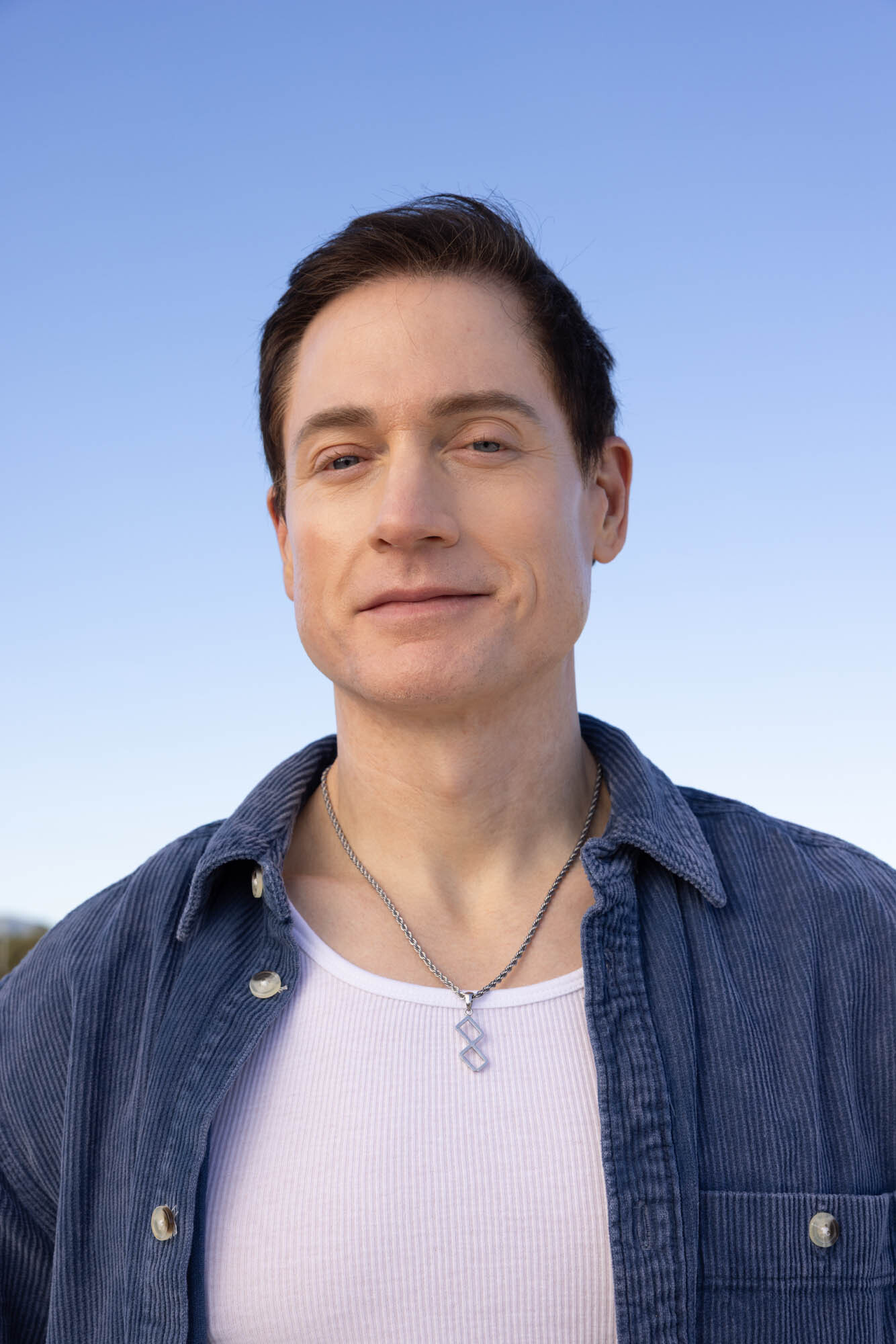
Bryan Johnson
Frontier Insights
Frontier Thesis: Human longevity and cognitive optimization require neuroplastic resets. Bryan Johnson positions high-dose psychedelics (psilocybin, 5-MeO-DMT) and neurotech (Kernel) not as recreational escapism, but as clinical mechanisms to dismantle aging brain rigidity, tracked across biomarkers, neuroimaging, and systemic physiology.
Strategic Play: Leverage algorithmic platforms and connected TV to bypass traditional media, converting radical self-experimentation into trusted audience capital to fund and validate life-extension protocols.
Risks & Warnings: Severe downside exposure includes permanent psychosis, adverse physiological volatility, founder behavioral instability, and reliance on unvalidated, early-stage neuro-biomarker datasets. Precision dosing and clinical oversight remain non-negotiable.
Key Views & Dialogues
Bryan Johnson: I Just Took the Most Powerful Dose of DMT in the World… Here’s What It Was Like
- 🗓️ Date:
2026-03-26| 🎙️ Show:All-In
Johnson frames 5-MeO-DMT as a potential longevity modality disrupting age-stiffened brain patterns, but his reset remains subjective pending MRI, Kernel and EEG analysis. Earlier psilocybin sessions coincided with altered connectivity, a blood-glucose shift from the top 99.5% to 99.9%, and microbiome changes, without proof of causality or durability. Governance remains central: supervision may reduce psychosis and founder risks, while mitochondrial, FOXO3 and organoid programs remain exploratory.
View Dialogue Notes & Key Takeaways
Johnson’s core call is that psychedelics might become a longevity modality by disrupting age-stiffened brain patterns in ways diet, exercise, sleep, sauna and hyperbaric oxygen do not. Forty-eight hours after 5-MeO-DMT, he called it a “reset of me as a human,” but had only subjective results; structural and functional MRI, Kernel imaging and EEG analysis were still pending.
His earlier psilocybin work provides the hypothesis, not proof: three 25 mg doses appeared to weaken habitual connectivity, move his blood-glucose ranking from the top 99.5% to 99.9%, and alter his microbiome. Johnson connected those observations to mouse evidence and reduced inflammation, saying “we think it’s a longevity therapy”; causality, durability and generalizability remain unresolved.
The acute 5-MeO experience was categorically stronger in Johnson’s account: onset within 10 seconds, little visual content and an apparent annihilation of the default-mode “engine” that constructs self and ego. Relinquishing “all attachment, all preconditions, all want, all desire” unlocked what he called his most dynamic human experience, followed by childlike excitement, humor and less defensive conflict with his partner.
The downside is governance-grade, not merely clinical: Friedberg raised permanent psychosis, schizophrenia risk, bad trips and founders abandoning companies or families after radical value changes. Johnson acknowledged that investors have inserted no-psychedelics clauses into deal documents; quantified dosing, licensed supervision and proper set and setting might reduce risk, but “some people may simply not be appropriate candidates.”
The conversation raised whether rapid psychological rewiring could flip from liability to asset as AI accelerates the pace of change. Friedberg suggested psychedelics might help humans adapt, while Johnson described profound “psychoflexibility”; the same mechanism carries tail risk that identity, priorities and obligations change. Johnson reported returning more committed to his work and fatherhood.
The longevity pipeline extends well beyond psychedelics into mitochondrial augmentation, FOXO3 delivery, personalized organoids and computational cell reprogramming. Johnson plans an exploratory mitochondrial procedure, wants to replicate a reported FOXO3 tissue-regeneration result, and has created heart, liver and lung organoids from his induced pluripotent stem cells—although testing has not begun and he repeatedly marked the concepts as TBD.
Johnson sees GLP-1s as longevity’s first big “drop,” with NewLimit or plasma-based FOXO3-like therapies potentially providing a later visible proof point. The bottleneck is control: Friedberg warned that overdosing even one cell with Yamanaka factors could initiate a tumor and theorized that feedback-controlled cellular switches would be needed.
🔗 Original source & video: Bryan Johnson: I Just Took the Most Powerful Dose of DMT in the World… Here’s What It Was Like
All-In Live from Austin: Colin and Samir, Chris Williamson, and Bryan Johnson
- 🗓️ Date:
2025-04-03| 🎙️ Show:All-In
YouTube is taking television share as connected TVs reach 50% of Colin and Samir’s watch time, shifting media power toward creator distribution and revenue sharing rather than commissioned programming. The durable asset is trusted audience access, which can yield ads, products, courses, events, and business credibility; Spotify’s experimental video subsidies and AI-assisted production offer catalysts, while human attachment remains unresolved.
View Dialogue Notes & Key Takeaways
YouTube’s television footprint is shifting media bargaining power toward creator distribution. Colin and Samir said connected TVs generate 50% of their watch time, leading creators often get roughly 70% of views from non-subscribers, and Jason cited YouTube at 11% of connected-TV usage versus Netflix at 88.5%. Netflix may spend $18 billion on content, but YouTube funds whatever wins through revenue sharing: “They actually technically don’t know what’s going to get uploaded today.”
The durable creator moat is audience trust followed by permissioned access, not an expensive launch. The prescription was to stay lean, accept that “your first hundred videos are going to suck,” and treat the audience relationship as the product; later, ads, equity partnerships, owned goods, courses, events, or business credibility can monetize it. Friedberg’s agricultural meetings show the indirect return: podcast recognition “reduces friction” because he enters already trusted.
Legacy media probably cannot repatriate escaped talent without offering economically irrational terms. A successful creator would surrender reach, control, and often IP by moving behind a network or streaming wall, while legacy operators must support buildings, large crews, shareholders, and their own cost structure. Jason’s conclusion was directional: “It’s entropy—it’s only going in one direction.”
Creator monetization is evolving from spot advertisements into full-stack audience yield. Chris Williamson packages 40 million to 60 million annual impressions with Instagram, a 300,000-subscriber newsletter carrying a 50% open rate, and other services; he also rejects investing and gold advertisers he cannot assess. In Spotify’s January-February video partner program, just 10% of his catalog reportedly earned more than his entire YouTube AdSense—a striking, though explicitly experimental, platform subsidy.
Authenticity and algorithmic competence form a barbell rather than an either-or choice. Williamson calls his 900-episode catalog a “thinly veiled autobiography,” yet employs two full-time catalog strategists and two back-catalog strategists; he also spends close to the $30,000-$40,000-per-episode estimate discussed on some cinematic episodes. The sharper operational edge may be speed: All-In said a major event after Thursday recording can make Friday’s release “stale” and cut volume roughly 40%.
AI is winning inside the production stack before it wins as autonomous programming. Colin and Samir use AI for scripting and camera-angle cuts but could not identify a fully generative channel they knowingly enjoy; NotebookLM’s nine-minute rendering of a Spotify earnings report showed the appeal of personalized efficiency. The unresolved moat is human attachment: “shared cultural facts” may survive while everyone receives a different commentator and cultural experience.
Audience-led products work when demand and trust precede inventory. Bryan Johnson said Blueprint would reach $100 million in sales in less than 12 months while operating around break-even; Williamson’s improved energy drink drew major-player interest after 18 months, while Colin and Samir favor courses as a direct extension of creator education. The broader mechanism is consistent: “Everyone is making videos, attracting an audience and selling a product”—either their own or somebody else’s.
Johnson’s health thesis is expanding into testing infrastructure, but the panel preserved material scientific and behavioral caveats. His proposed $500 crowdfunded food tests target the 20% of foods comprising 80% of the U.S. diet, while his personal hierarchy remains sleep, exercise, then diet. His ketamine measurements suggested brain patterns became more open for two or three days before returning toward prior patterns on days three through five, while plasma treatment for his father was undertaken with the explicit hedge, “We don’t know whether it’s going to work or not.”
🔗 Original source & video: All-In Live from Austin: Colin and Samir, Chris Williamson, and Bryan Johnson