Jen Kha
Frontier Insights
Frontier Thesis: AI is shifting from foundation models to sovereign geopolitical infrastructure and workflow-native applications. True alpha lies beyond commoditized compute, moving into labor automation, proprietary data, and full-stack outcome delivery.
Strategic Imperatives: Back AI-native firms exhibiting extreme revenue-per-employee leverage ($500K–$1M ARR/head). Defensibility requires owning system-of-record workflows, scarce domain corpora, and local sovereign distribution to anchor strategic institutional capital.
Critical Risks: Hyperscaler capex demands ~$1T in annual revenue by 2030 to clear hurdle rates. Failure to overcome enterprise change-management constraints risks a structural capital-efficiency crisis.
Key Views & Dialogues
The State of AI: Models, Moats, and the Consumer Renaissance
- 🗓️ Date:
2026-08-26| 🎙️ Show:The a16z Show
Frontier AI is becoming a many-winners market: xAI moved from non-contender to one of three in two weeks while OpenAI, Anthropic and others grow through specialization. Rising B200 per-hour prices indicate constrained supply and essentially infinite demand, but coding agents threaten integration moats; open-weight models may capture bounded-upside workloads as cheaper consumer software awaits an AI-native app store.
View Dialogue Notes & Key Takeaways
Anish Acharya plants his flag in the “many winners” camp on frontier labs. In the last 2 weeks, xAI went “from not even being a real contender on the model side to being one of three” — a two-horse race became three — while Anthropic’s apparent dominance gave way to OpenAI’s excellent 3 months (new models, the Codex harness, and the ChatGPT desktop app), with multiple labs growing despite each other’s successes. Jen adds the tradeable overlay: X is an imperfect weather vane but an early indicator of developer sentiment; Claude is taking token-usage pushback, and Anthropic is going public later this year.
The under-discussed macro scenario isn’t the bubble — it’s “what if we’re insufficiently optimistic?” B200 per-hour prices are rising even though it is a non-cutting-edge GPU and compute is normally deflationary, which “points to very constrained supply and essentially infinite demand.” On SaaS: February’s 30–40% drawdown was overselling and many names are back up 40%, but with SBC distortions now visible it’s “accelerate or die.”
Most moats survive abundant low-cost intelligence — but the integration moat is at risk. Network, scale/distribution, and brand effects are “as good as they’ve ever been” (“no amount of coding agents is going to make Nike not Nike”), while coding agents make SAP-style integration dramatically better and raise an “existential question” for SIs and GSIs.
Token spend rationally splits by bounded versus unbounded upside. For sales and product, “it’s economically rational to pay almost any price for a model that’s even 1 IQ point smarter” — “your Fable 5 or your Gro or your GPT56”; for finance, “you can’t close the books 10 times better than accurately,” so open-weight models plus reinforcement learning may be the Pareto-efficient choice. Models aren’t commodities: neurotic, literal GLM 5.2/5.3 versus open, presumptuous Kimi K3 — organizations need both minds.
Labs are vertically integrating down into inference, not up into apps — inverting the early-2025 panic. Anthropic’s legal “plugin” (just collections of long prompt files) sparked a panic in which Thomson Reuters and other legal names traded down, but inference workloads are homogeneous and scalable while the app layer is idiosyncratic and OpEx-heavy; and in a multi-model Pareto-frontier world, labs have a harder time capturing “100% of your gross margin.”
The consumer’s quarter may finally be here, but “we’re in the DOS era of AI” awaiting its Windows. Open-weight models are making AI software dramatically cheaper and more performant (Jen’s own X-timeline app cost $250 to onboard a new user), there’s still no AI-native app store, and consumers are excited to try and pay for new software — Anish compares the moment to Christmas 2009 with the iPhone, except consumers may now pay $200 a month.
The investing posture has hardened around live product and technical founders. It’s now “disqualifying to not be showing a live product in a pitch at any stage”; founders skew “less MBAs, more researchers”; and per Ben at the offsite, “the biggest risk in the past was the ideas were too big and now the biggest risk is that the ideas are too small.” New business formation is at an all-time high outside a peak moment during COVID — the 25-year-old who would have been a YouTube creator now builds neighborhood SaaS.
🔗 Original source & video: The State of AI: Models, Moats, and the Consumer Renaissance
Ben Horowitz on the Global Race for Tech, Power, and Influence
- 🗓️ Date:
2026-07-03| 🎙️ Show:The a16z Show
AI models are becoming geopolitical infrastructure because their defaults will mediate products while encoding contested histories, ethics, and values, making model choice a question of sovereignty as well as performance. Private AI, autonomy, and cyber vendors now shape allied deterrence, while global APIs expose startups to demand before local distribution exists; anchor customers and trusted relationships can justify $5 million or $10 million market-entry investments.
View Dialogue Notes & Key Takeaways
AI models are becoming geopolitical infrastructure because they will mediate nearly every product while encoding contested histories, ethics, and values. Horowitz’s warning that “the models are not objective. They have opinions” makes model choice a sovereignty decision, not just a benchmark or cost comparison: the defaults inside cars, education, and household systems will project somebody’s worldview.
Deterrence increasingly rewards innovation velocity, not only military scale, pulling private AI, autonomy, and cyber vendors into the core of allied security. Neuberger points to the Strait of Hormuz and Red Sea: adversaries can field cheap, software-built systems, while “those technologies today are not being built by governments.” Government-private-sector access and allied interoperability therefore become strategic assets.
AI and APIs globalize product demand before startups have the organizational capacity to serve it, creating a distribution bottleneck for venture-backed companies. Raghuram contrasts the old threshold of “a few hundred million dollars in revenue” with today’s earlier international pull, but stresses that local relationships and market structure still matter. In top-heavy economies, five or 10 companies plus government can matter most, so access may outperform a premature full-country rollout.
An anchor customer can reverse the economics of market entry: a $5 million or $10 million opportunity can justify the same scale of upfront country investment. Horowitz argues this is a16z’s edge in allied, AI-forward, relationship-heavy markets, where government, business, investors, and adoption are intertwined. The target map includes Japan, Korea, the Middle East, Mexico, and Canada, while Raghuram notes Japan, Korea, and Taiwan contain 15–20% of the Forbes Global 2000.
Cybersecurity is the clearest dual-use AI opportunity and the hardest policy trap: finding a vulnerability enables both patching and exploitation. Neuberger believes the models may help defense “far more,” because defenders cover a broad expanse while attackers need one opening; AI can “jiggle every doorknob continuously and at scale.” Yet Horowitz warns that restricting vulnerability discovery could also prevent defenders from auditing and patching their own code.
Silicon Valley is not software that can simply be copied online; its moat combines technical talent, entrepreneurship-friendly rules, and a culture that grants status to risk-taking. Horowitz calls the internet-as-distributed-Valley thesis “happy talk” and warns the culture is “so easy to destroy.” The investable corollary is that tax, property, hiring, and social incentives can expand—or abruptly shrink—the founder and growth-capital pipeline.
🔗 Original source & video: Ben Horowitz on the Global Race for Tech, Power, and Influence
AI Markets: Deep Dive with a16z’s David George
- 🗓️ Date:
2026-02-09| 🎙️ Show:The a16z Show
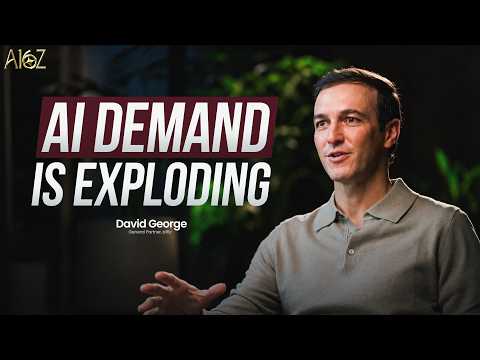
AI-native companies grow more than 2.5x faster, with top performers reaching 693% year-over-year growth and $500,000-$1 million of ARR per employee. Engagement and operating evidence includes Navan handling 50% of travel interactions with AI and expanding gross margins 20 percentage points, while enterprise change management remains the key execution risk.
View Dialogue Notes & Key Takeaways
AI-native demand is separating sharply from the rest of software. George says AI companies are growing more than 2.5x faster, with top performers at 693% year over year and the fastest reaching $100 million in revenue much sooner than SaaS predecessors. “AI demand is crazy,” yet the fastest-growing companies spend less—not more—on sales and marketing.
The strongest AI companies pair extraordinary growth with $500,000-$1 million of ARR per employee. That compares with a roughly $400,000 SaaS-era rule of thumb, while lower gross margins can be a “badge of honor” when high inference costs indicate customers are actually using AI features. George cautions that strong demand, lean staffing and general efficiency gains after the bloated 2021 era explain much of today’s efficiency; wholesale AI-driven organizational redesign remains early.
Pre-AI companies must “adapt to the AI era or die” across both products and internal operations. One founder gave two AI-fluent engineers unlimited access to Claude Code, Codex and Cursor; they rebuilt a product he was frustrated with at an estimated 10-20x faster pace, prompting him to rethink the product-and-engineering organization within 12 months. The extreme operating question is now: “Can I do it with electricity or do I need to do it with blood?”
Engagement data makes the best application revenue look durable rather than experimental. George says Harvey users spend roughly twice as much time in the product; Abridge maintained or increased engagement while rapidly adding clinicians; and Navan now handles 50% of travel interactions with AI, helping gross margins expand 20 percentage points over three years. George cites Flock as solving 700,000 crimes annually, with officers clearing almost 10% more where it operates.
Enterprise intent is running well ahead of implementation, creating a widening execution gap. Fortune 500 leaders say they must become AI companies, but George calls change management—not model readiness—the central constraint. Early results show the stakes: Chime cut support costs 60%, while Rocket Mortgage saved 1.1 million underwriting hours and reached $40 million of annual run-rate savings.
AI winners have produced almost 80% of the S&P 500’s return, but George sees earnings rather than speculative multiple expansion underneath the rally. Multiples are above average yet far below dot-com levels, and investors favor profitable growth over the loss-making growth rewarded in 2021. His durable factor remains growth: “Ultimately, growth is the biggest thing that drives returns over five to 10 years.”
The infrastructure buildout has bubbly features, but utilization and financing still differ materially from prior bubbles. Hyperscalers are supported largely by historically profitable companies and cash flows, seven- to eight-year-old Google TPUs remain fully utilized, and rental pricing for A100s and H100s has held up—hence the relayed line, “There are no dark GPUs.” The watchpoint is debt: Oracle is making a large, cash-flow-negative cloud bet, while its credit-default-swap cost has risen to roughly 2%.
The payback hurdle is enormous and may extend well beyond 2030, while private markets are now a major asset class. Against roughly $4.8 trillion of cumulative hyperscaler capex, annual AI revenue must approach $1 trillion by 2030—about 1% of global GDP—to clear a 10% hurdle rate; George’s rough current estimate is only $50 billion, albeit growing well above 100%. Meanwhile, about 86% of companies above $100 million in revenue remain private, and the ten largest North American and European unicorns hold almost 40% of a $5.5 trillion valuation pool.
🔗 Original source & video: AI Markets: Deep Dive with a16z’s David George
The Biggest Bottlenecks For AI: Energy & Cooling
- 🗓️ Date:
2026-01-26| 🎙️ Show:The a16z Show
AI infrastructure is becoming a utility layer: big-tech capex annualizes near $400 billion, model-access costs fell more than 99% in two years, and ChatGPT reached 365 billion searches in two years. Energy is likely the next five-year bottleneck, followed by cooling, while application durability depends on 90% or more retention, easy acquisition, and workflow depth rather than model access alone.
View Dialogue Notes & Key Takeaways
David George’s base case is that AI infrastructure is being financed by companies strong enough to absorb overbuild while the cost-performance curve compounds in application developers’ favor. Annualizing the latest quarter puts big-tech capex near $400 billion, “most of that” for AI infrastructure and data centers; model-access costs fell more than 99% in two years while frontier capability doubled every seven months. He expects AI to become “like electricity or Wi-Fi,” with large tech companies carrying much of the substrate cost.
The dot-com analogy breaks, in George’s view, because today’s capacity sits atop internet and cloud distribution and already has usage at global scale. ChatGPT reached 365 billion searches in two years versus Google’s 11, while George estimates 1.5–2 billion active AI users across products; the builders and tenants are stronger, though leverage routed through banks, private debt, and insurers remains worth watching. “It’s built on the back of the previous technology cycles.”
The addressable value pool is labor, not merely software: US software spend is about 1% of GDP versus white-collar payroll near 20%. George expects AI to exceed the roughly $10 trillion of value created by mobile and cloud, with perhaps 90% of value accruing to customers and 10% to vendors—still enough for enormous market caps. If completed work remains hard to measure and price, competitive forces will leave even more surplus with users.
Consumer AI may surprise on price before it surprises on reach. ChatGPT was described as having more than one billion monthly active users and 30–40 million paying users, versus perhaps two billion AI users overall; India pricing near $3–4 a month coexists with US premium products at $200–300. George thinks the P in P×Q has substantial runway because “there’s way more upside to monetize the base than there is risk of price pressure.”
Kha and George’s bottleneck view is that chip and infrastructure capacity should scale, but energy is likely the limiting factor for the next five years and cooling follows behind it. Kha points to nuclear, expects Three Mile Island to get powered back up, and cites West Texas natural gas; xAI’s speedrun required buying backup generators across a multistate region and labor off other projects. Kha’s next constraint is cooling the buildout “without boiling our oceans” or melting the chips.
For AI applications, George would accept temporarily weaker gross margins—but not weak product love. The underwriting hierarchy is 90% or more gross retention and easy customer acquisition ahead of current margin, conditional on multiple model suppliers driving inputs lower; GPT-5, Anthropic, and Gemini were cited as competitive pressure. Consumer products can be sticky, while raw developer APIs are “not very sticky” because switching can be one API call.
The investable high-growth frontier has migrated into private markets, making access and liquidity—not just selection—core return variables. Billion-dollar private companies total roughly $3.5 trillion versus $500 billion ten years ago, companies now remain private for about 14 years, and only around 5% of public software and internet names forecast growth above 25% for the next 12 months. a16z’s approach pairs “undeniable momentum” with unusually early bets on only the strongest research teams.
Incumbent software is vulnerable only where a startup can combine three breaks at once: reimagined UI/UX, a new data layer, and disruptive pricing. Salesforce is George’s example of an uninspiring front end attached to a sticky database; AI can shift software from keeping records to doing work, but he has not yet seen the killer dethroning idea. Near-term opportunities sit around systems of record rather than in wholesale replacement.
Beyond AI infrastructure and applications, George expects American Dynamism to be the next-largest area, with some AI-enabled health activity and crypto pursued alongside the crypto team. Stablecoin enablement could become more significant if that market takes off. The portfolio follows best ideas rather than a quota for new investments versus follow-ons, and George says a16z’s edge also comes from early-stage access plus market and product insights.
🔗 Original source & video: The Biggest Bottlenecks For AI: Energy & Cooling
The AI Opportunity that goes beyond Models
- 🗓️ Date:
2026-01-19| 🎙️ Show:The a16z Show
AI is becoming a full software cycle atop smartphones and cloud infrastructure, with roughly 15% of adults globally using ChatGPT weekly. Greenfield systems and labor automation offer the cleanest openings, while Salient’s 50% collection lift favors revenue creation over savings-only pitches. Durability depends on owning workflows and private outcome data as models commoditize and incumbents monetize installed distribution.
View Dialogue Notes & Key Takeaways
AI is becoming a full software product cycle, not a standalone model cycle, because it compounds every prior layer—PC, internet, cloud, and mobile—and reaches billions of potential users through smartphones. Rampell says “the vast majority of net new revenue” in software is now coming from AI at both infrastructure and application layers, while capabilities advanced in two years from text, images, and basic reasoning to native audio and real-time interaction. The investor consequence is an application market growing on already-deployed distribution rather than waiting for a new device base.
Adoption evidence is moving from novelty to ROI: Ramp’s customer expense data inflected in January 2025, software companies are reaching $100 million of revenue from zero in one or two years, and roughly 15% of adults globally use ChatGPT weekly. Rampell’s behavioral shorthand is that people want to be “richer and lazier”; the “magic trick has actually gone into the enterprise” because it now saves time, lowers cost, or produces revenue, regardless of whether current valuations are rich or cheap.
AI-native replacements have their best opening at greenfield moments, while installed systems of record make brownfield displacement brutally difficult and let incumbents monetize captive workflows. Rillet can win when a 50-person company with three entities and two currencies must graduate from QuickBooks, but an “AI NetSuite” or Mailchimp clone faces switching friction. Rampell’s deliberately sharp maxim is “the best companies have hostages, not customers,” though he distinguishes durable moats from businesses users hate.
The largest new TAM comes from turning labor into software, but the compelling pitch is often revenue creation rather than headcount reduction. Salient reportedly helps auto lenders collect 50% more, speaks 21 languages, tracks legal requirements across all 50 states and sometimes counties, and automates work for a $50 million call center with 40%-70% annual employee churn. “We are going to make you more money, and it’s going to cost you less” is stronger than a savings-only story.
AI capability is differentiation, not defensibility; the moat is owning the end-to-end workflow and compounding private outcome data. EvenUp routes “literally 100%” of cases through intake, evidence gathering, medical chronologies, demand letters, and complaints, then learns which cases may be worth $50,000 versus $5 million—potentially lowering the viable case floor from $50,000 to $5,000. Haber calls that loop “showing up to a knife fight with a gun.”
Walled-garden data businesses can capture far more value by selling the finished answer instead of licensing raw information. OpenEvidence combines an exclusive medical-journal license with a ChatGPT-like interface reportedly used weekly by two-thirds of U.S. doctors; VLex’s AI layer reportedly quintupled revenue after 26 years of aggregating legal records, while Ask Leo uses otherwise unavailable contract history such as 50 Deloitte agreements. Rampell’s metaphor: own the rare “vegetables,” then sell the finished meal.
The startup opportunity survives strong incumbents, but selection shifts toward model aggregators, proprietary corpora, vertical operating systems, and acquisitions that buy distribution once—not endless services roll-ups. Acharya argues aggregators can offer a “single pane of glass” across specialized models, unlike labs tied to first-party models; Rampell prefers buying one shrinking collector with five blue-chip clients at three times EBITDA over integrating 200 accounting firms. Early enterprise retention is described as strong, with spending tilting toward forward-deployed engineering as customers ask startups where AI should be applied.
🔗 Original source & video: The AI Opportunity that goes beyond Models