洪力德
Frontier Insights
SpaceX’s impending IPO represents commercial space’s “ChatGPT moment,” but the definitive inflection point was December 2015’s first booster recovery. By slashing launch costs from $20,000/kg to Falcon 9’s $3,000/kg—and targeting sub-$100/kg with Starship—SpaceX shifted economics from prohibitive luxury to scalable infrastructure. The strategic frontier now moves to space-based compute and orbital manufacturing. However, real enterprise value hinges on a critical operational risk: proving whether off-planet data centers and factories can realistically beat terrestrial efficiency, power economics, and thermal overhead.
Key Views & Dialogues
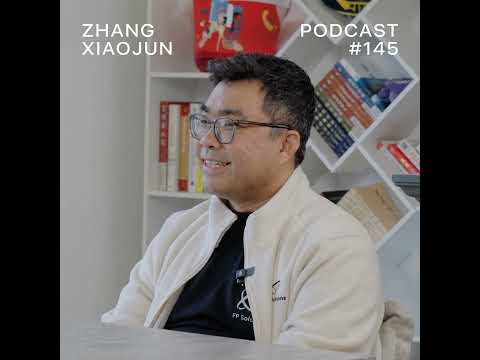
145. The Oral History of SpaceX’s Development: A Conversation with Former Executive 洪力德 on Elon Musk’s Hiring Philosophy, the Biggest IPO, Space and AI, and the Prelude to Humanity’s Expansion into Space?
- 🗓️ Date:
2026-06-12| 🎙️ Show:张小珺Jùn|商业访谈录
Former SpaceX executive 洪力德 calls a potential IPO the space industry’s “ChatGPT moment,” while identifying the December 21, 2015 recovery as the real technical inflection point. Reusable rockets cut launch costs from $10,000-$20,000 per kilogram to $3,000, with Starship targeting below $100; space data centers must still prove they can outperform terrestrial facilities.
View Dialogue Notes & Key Takeaways
Former SpaceX executive 洪力德, who oversaw 7 departments and more than 3,000 rocket components and is now GP at Aries Fund, sees a SpaceX IPO as “the space industry’s ChatGPT moment.” But that would mark an inflection point in how capital understands the sector, not in the underlying technology. The real turning point was December 21, 2015, when SpaceX first reached orbit and recovered a rocket: “Once you can recover the vehicle, that is the starting point for everything.”
The first-principles logic behind the xAI acquisition is a space-based data center. U.S. data-center construction is constrained by permitting and power shortages: most facilities across the 3 major grids are more than 30 years old, the newest nuclear plants were built in the 1990s, and the power gap had already reached 25-40% before AI. Space needs no permits, solar conversion efficiency is more than 10 percentage points higher, and signals travel twice as fast through a vacuum as over the most advanced terrestrial fiber. “Whoever gets there first gets the position.”
Musk bought the x.com domain in 2014, and 洪力德 speculates that his companies will eventually converge into an Alphabet-like X holding company. Tesla would handle physical AI, Neuralink the most direct human-machine interface, and the tunneling company may be tied to radiation-shielded underground housing: “I don’t think these companies are accidental.” Grok’s foothold may be Physical AI and world models; he says 2026 Grok will be worth watching.
Rockets are a means, not the end. Falcon 1 was retired immediately after its fourth launch succeeded in 2008; the cost of putting a kilogram into orbit fell from $10,000-$20,000 before SpaceX to $3,000 with a reusable Falcon 9, while Starship targets less than $100. Once the cost falls to one-two-hundredth, “projects that used to sound like science fiction in space start to pencil out on the books.”
Firsthand testimony captures Musk’s management style. He holds only 3 kinds of meetings: when something is late, cannot be built, or needs more money. A 30% efficiency improvement earns “get out—you’re not thinking,” because the bar is an order-of-magnitude or even 100x leap. After the team developed a high-pressure vessel at 90% lower cost, Musk’s only response was, “Have you ever looked at how soda cans are made?” When a veteran engineer said something was impossible, Musk calmly replied, “Okay, then I accept your resignation.”
Space startups split into a “SpaceX chain” (Apple chain) and an “Android chain,” with the core founders forming a “new Elon mafia.” His investment targets include space manufacturing—perfect spheres for artificial corneas in zero gravity and next-generation wafers made in a vacuum—and controllable-gravity space stations, a field with 17 companies competing globally.
He has barely sold any SpaceX stock, calling it “at least a trillion-dollar company”—and stressing the “at least” repeatedly. He compares it with the East India Company during the Age of Discovery and says it is only getting started. On competition, Musk’s exact words were: “Our competitor is the speed of our own progress, but we are watching China’s space program closely.”
🔗 Original source & video: 145. The Oral History of SpaceX’s Development: A Conversation with Former Executive 洪力德 on Elon Musk’s Hiring Philosophy, the Biggest IPO, Space and AI, and the Prelude to Humanity’s Expansion into Space?