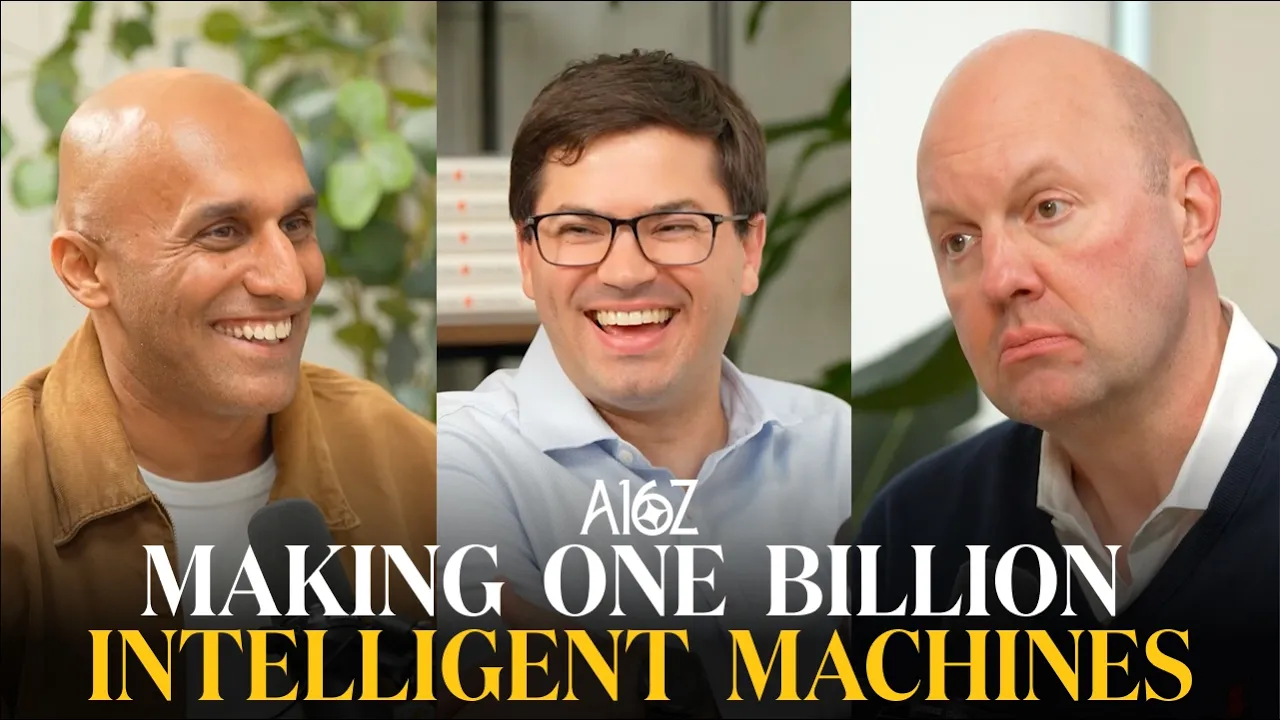
Marc Andreessen
Core Stance & Frontier Insights
Applied Intuition is targeting the physical economy with intelligence for 1 billion machines, while automotive already represents only 30% of its business. Its proprietary data, simulation, safety stack, and incumbent distribution support deployment across fragmented industrial markets, but adoption will be paced by L2++ economics, hardware validation, and real-time reliability. Core Frontier Thesis: Software is breaking into the physical economy. The next generational alpha lies at the intersection of Physical AI—scaling intelligence across billions of machines via proprietary simulation and safety data—and unconstrained software creation supercharged by 20x developer productivity.
Strategic Decisions: Double down on vertical hardware integration, aggressively dismantle organizational bloat to fund aggressive product expansion, and bypass legacy press in favor of founder-led media engines that build sovereign narrative power.
Risks & Warnings: Hardware validation bottlenecks, real-time safety liabilities, founder-centric key-person risk, and structural burnout as human talent strains under relentless AI-accelerated output.
Curated Podcasts & Talks
Why Physical AI Is the Next Frontier | Applied Intuition with a16z
- 🗓️ Date:
2026-07-21| 🎙️ Show:The a16z Show
Applied Intuition is targeting the physical economy with intelligence for 1 billion machines, while automotive already represents only 30% of its business. Its proprietary data, simulation, safety stack, and incumbent distribution support deployment across fragmented industrial markets, but adoption will be paced by L2++ economics, hardware validation, and real-time reliability.
View Dialogue Notes & Transcript Memo
Interview Summary & Key Takeaways: Applied Intuition is targeting the physical economy with intelligence for 1 billion machines, while automotive already represents only 30% of its business. Its proprietary data, simulation, safety stack, and incumbent distribution support deployment across fragmented industrial markets, but adoption will be paced by L2++ economics, hardware validation, and real-time reliability.
- 🔗 Original source & video: Why Physical AI Is the Next Frontier | Applied Intuition with a16z
- 📝 Transcript Status: Core insights and takeaways summarized. Full runtime is approx 45-90 mins.
View Dialogue Notes & Key Takeaways
Applied Intuition’s thesis is that the largest AI value pool may sit in the physical economy, not the browser. The company wants to put intelligence on 1 billion machines across cars, trucks, tanks, drones, mines, ports, farms, and supply chains; automotive is already only 30% of its business. Qasar Younis argues that, viewed 25 years out, companies affecting the physical world “might actually be bigger than the companies that impact the digital world.”
Its near-term advantage is less a single model than an accumulated production stack spanning proprietary data, simulation, hardware, and safety. Applied has hundreds of petabytes of data, one of the world’s largest collection fleets, models deployed on “50-some platforms,” more than 1,000 engineers, and 18 offices. It has raised roughly $1 billion, which Younis says remains in the bank—with the caveat that it could be spent “next month” pursuing the enormous markets now opening.
Self-driving has crossed from scientific uncertainty into cost-driven engineering, but the coming default is initially L2++, not universal driver-out autonomy. Younis describes current Tesla-style systems as below $1,000 and expects systems comparable to today’s Tesla experience to enter 2028-30 production cycles and become cheap or free in the early 2030s; around $500, he expects OEMs to bundle them as standard. His formulation is “wait, wait, wait, and then a lot.”
Robotaxis and industrial autonomy will scale on different clocks because their economics, buyers, and constraints are different. Andreessen offers 2028 as a plausible availability date for robotaxis across the 200 largest U.S. cities and says they will be routine by 2030; Younis says availability by 2030 but routine use in 2032 or 2033. Trucking, mining, and quarries are calculator businesses where redundant steering and braking must be validated—but operators facing immediate labor shortages are already saying, “If you can do this, we’ll give you everything.”
The labor-displacement narrative is inverted in many physical industries: autonomy is arriving where dangerous jobs are already hard to fill. The average American farmer is 58 and fewer than 10% are under 35; mining represents about 1% of global labor but 8% of work-related fatalities. Younis says multiple trucking companies already have driver-out goals and puts removal of the safety driver only “a few years” away, potentially lowering transportation from several dollars per mile toward 20 cents.
Applied’s business model is horizontal distribution through incumbents, closer to a chip supplier than a vertically integrated Tesla or Waymo. Its intelligence runs under customers’ brands—Isuzu trucks in Japan already carry commercial loads autonomously with safety drivers—and its tools also serve customers that want to build internally. In a sovereign-AI world, Younis expects physical AI deployment to be more localized and geopolitically fractured, which favors a provider embedded in local economies. The attraction is the design-win dynamic: deep integration, long relationships, and “once we’re in, we’re in.”
Dana is Applied’s attempt to turn autonomous-system development from specialist craft into an agentic software workflow. The platform packages nearly a decade of scenario creation, data work, imitation learning, reinforcement learning, simulation, validation, and deployment; workflows that took days or weeks can sometimes run in minutes. The ambition is explicit: “A high school kid or a middle schooler” should be able to build a delivery robot, while today-obscure drone and humanoid development becomes “teenager play.”
World models can accelerate physical AI, but real-time operation and imperfect simulation keep the deployment moat intact. Peter Ludwig describes a continuum from deterministic physics and 3D Gaussian representations to reactive neural video; the closer it gets to reality, the easier training becomes, but accurate alignment is “an impossibly difficult problem.” Unlike digital labs that can tolerate trillion-parameter models running slowly, onboard systems get milliseconds and must remain small, deterministic, safe, and robust to fog, heat, calibration drift, and hardware failures.
🔗 Original source & video: Why Physical AI Is the Next Frontier | Applied Intuition with a16z
The New Media Advantage with Ben Horowitz and Marc Andreessen
- 🗓️ Date:
2026-06-19| 🎙️ Show:The a16z Show
Legacy media’s shift toward agenda-driven journalism since 2017 has made repeatable favorable coverage unreliable, pushing founders toward owned channels, allies, podcasts, and newsletters. The person-as-brand model rewards authentic long-form command and outside-in narratives, potentially converting relevance around military AI, geopolitics, or supply chains into executive access, but concentrates key-person risk and can amplify an irrelevant message.
View Dialogue Notes & Transcript Memo
Interview Summary & Key Takeaways: Legacy media’s shift toward agenda-driven journalism since 2017 has made repeatable favorable coverage unreliable, pushing founders toward owned channels, allies, podcasts, and newsletters. The person-as-brand model rewards authentic long-form command and outside-in narratives, potentially converting relevance around military AI, geopolitics, or supply chains into executive access, but concentrates key-person risk and can amplify an irrelevant message.
- 🔗 Original source & video: The New Media Advantage with Ben Horowitz and Marc Andreessen
- 📝 Transcript Status: Core insights and takeaways summarized. Full runtime is approx 45-90 mins.
View Dialogue Notes & Key Takeaways
Andreessen and Horowitz’s core call is that legacy media has ceased to be a reliable strategic channel, forcing founders to “go direct” through owned outlets, allies, podcasts, and newsletters. Horowitz says traditional coverage felt worthwhile roughly 90% of the time from 1994 through 2017; since the 2017 shift toward agenda-driven journalism, “there is no way to get to anything resembling a story that you’re going to like” at repeatable scale.
Media decentralization has replaced the abstract corporate brand with a durable human one, creating both a competitive advantage and a key-person dependency. New media offers “unlimited formats, unlimited channels, and the brand is now the person”: Elon rather than SpaceX, Alex Karp rather than Palantir, Palmer Luckey rather than Anduril. A CEO can delegate the role only to someone permanently identified with the organization—not a marketing executive on a three-year tour.
Long-form media rewards authentic command of a subject, while conventional media training optimized executives into forgettable defensiveness. Andreessen’s formative advice was to “say all the things in public that you would say if you were sitting having lunch with a friend”; today, a presidential candidate may need to sustain three hours on Joe Rogan and “talk about anything.” Horowitz’s verdict: lacking that capability puts “a ceiling on your whole opportunity.”
Distribution cannot rescue an irrelevant message and may instead scale the damage. Goldberg calls distribution “really just a multiplier on the message”: getting onto Joe Rogan without knowing what the audience needs to hear could be “the worst thing ever.” The disciplined sequence is to choose an outcome—winning an enterprise buyer or recruiting a particular engineer—work backward to the timely belief that audience needs, and only then amplify it.
The strongest founder narratives move outside-in, attaching the company to an urgent external shift rather than reciting milestones. Horowitz jokes that Karp’s only words about Palantir are “ontology” and “orchestration”; Andreessen says Karp instead plugs the company into whatever is interesting, such as the military, AI, geopolitics, or superintelligence, making him a first call when those subjects move. That perceived importance can unlock meetings with customer CEOs, Fortune 500 decision-makers, the White House, or the Secretary of War.
Conflict can compound brand equity, but only when the attack hits and the opponent already has an audience. Horowitz says a New York Times dispute produced his then-largest post because “everybody loves a fight,” while answering an account with 50 followers merely builds someone else’s audience. The objective is not universal approval: “You really want people to hate you and you want people to love you, but you don’t want to be neutral.”
New-media execution requires storytellers with proof of audience-building, not merely résumés from legacy communications. The team must shape the story—not receive an “empty box” to market—and explain complicated technology with detail, tension, and context. The capability is learnable: Torenberg notes that Karp’s older interviews were very different, while Andreessen points to Donald Trump’s restrained 1980s appearances as evidence that public communication can be deliberately developed.
🔗 Original source & video: The New Media Advantage with Ben Horowitz and Marc Andreessen
Marc Andreessen’s Worldview in 60 Minutes | Live on MTS
- 🗓️ Date:
2026-05-11| 🎙️ Show:The a16z Show
AI is already lifting leading-edge programmer productivity by an estimated 20x year over year, with higher compensation and exhausted “AI vampires” signaling demand rather than labor withdrawal. Andreessen argues AI-attributed layoffs may reset 2x–4x organizational bloat while funding more software, but adoption speed, role convergence, and institutional resistance remain key variables.
View Dialogue Notes & Transcript Memo
Interview Summary & Key Takeaways: AI is already lifting leading-edge programmer productivity by an estimated 20x year over year, with higher compensation and exhausted “AI vampires” signaling demand rather than labor withdrawal. Andreessen argues AI-attributed layoffs may reset 2x–4x organizational bloat while funding more software, but adoption speed, role convergence, and institutional resistance remain key variables.
- 🔗 Original source & video: Marc Andreessen’s Worldview in 60 Minutes | Live on MTS
- 📝 Transcript Status: Core insights and takeaways summarized. Full runtime is approx 45-90 mins.
View Dialogue Notes & Key Takeaways
Key Takeaways: AI is already lifting leading-edge programmer productivity by an estimated 20x year over year, with higher compensation and exhausted “AI vampires” signaling demand rather than labor withdrawal. Andreessen argues AI-attributed layoffs may reset 2x–4x organizational bloat while funding more software, but adoption speed, role convergence, and institutional resistance remain key variables.
- 🔗 Original source & video: Marc Andreessen’s Worldview in 60 Minutes | Live on MTS
Marc Andreessen on how the internet changed news, politics, and outrage | The a16z Show
- 🗓️ Date:
2026-04-22| 🎙️ Show:The a16z Show
The internet reinvented CNN’s “Randomonium,” converting each event into a viral meme, moral panic and opposing tribal camps that typically reset after roughly 2.5 days. Andreessen’s proposed media barbell pairs disposable short-form video with three-hour podcasts, Substack and deep research, while hidden paid advocacy and the unresolved question of whether online rage displaces physical violence remain important risks.
View Dialogue Notes & Transcript Memo
Interview Summary & Key Takeaways: The internet reinvented CNN’s “Randomonium,” converting each event into a viral meme, moral panic and opposing tribal camps that typically reset after roughly 2.5 days. Andreessen’s proposed media barbell pairs disposable short-form video with three-hour podcasts, Substack and deep research, while hidden paid advocacy and the unresolved question of whether online rage displaces physical violence remain important risks.
- 🔗 Original source & video: Marc Andreessen on how the internet changed news, politics, and outrage | The a16z Show
- 📝 Transcript Status: Core insights and takeaways summarized. Full runtime is approx 45-90 mins.
View Dialogue Notes & Key Takeaways
Key Takeaways: The internet reinvented CNN’s “Randomonium,” converting each event into a viral meme, moral panic and opposing tribal camps that typically reset after roughly 2.5 days. Andreessen’s proposed media barbell pairs disposable short-form video with three-hour podcasts, Substack and deep research, while hidden paid advocacy and the unresolved question of whether online rage displaces physical violence remain important risks.
- 🔗 Original source & video: Marc Andreessen on how the internet changed news, politics, and outrage | The a16z Show
Marc Andreessen introspects on Death of the Browser, Pi + OpenClaw, and Why “This Time Is Different”
- 🗓️ Date:
2026-04-03| 🎙️ Show:Latent Space
Andreessen argues AI has crossed from fluent generation into consequential reasoning, coding, agents, and recursive self-improvement, making the technical progress real despite possible boom-bust cycles. GPU overbuild remains a dot-com-style risk, but strong balance sheets, sold-out supply through the next three to four years, and software-driven chip value make betting against infrastructure dangerous while security, consolidation, and adoption remain unresolved.
View Dialogue Notes & Transcript Memo
Interview Summary & Key Takeaways: Andreessen argues AI has crossed from fluent generation into consequential reasoning, coding, agents, and recursive self-improvement, making the technical progress real despite possible boom-bust cycles. GPU overbuild remains a dot-com-style risk, but strong balance sheets, sold-out supply through the next three to four years, and software-driven chip value make betting against infrastructure dangerous while security, consolidation, and adoption remain unresolved.
- 🔗 Original source & video: Marc Andreessen introspects on Death of the Browser, Pi + OpenClaw, and Why “This Time Is Different”
- 📝 Transcript Status: Core insights and takeaways summarized. Full runtime is approx 45-90 mins.
View Dialogue Notes & Key Takeaways
Key Takeaways: Andreessen argues AI has crossed from fluent generation into consequential reasoning, coding, agents, and recursive self-improvement, making the technical progress real despite possible boom-bust cycles. GPU overbuild remains a dot-com-style risk, but strong balance sheets, sold-out supply through the next three to four years, and software-driven chip value make betting against infrastructure dangerous while security, consolidation, and adoption remain unresolved.
- 🔗 Original source & video: Marc Andreessen introspects on Death of the Browser, Pi + OpenClaw, and Why “This Time Is Different”
Marc Andreessen on The Future of VC: Will a16z Go Public & Why Introspection is Dangerous?
- 🗓️ Date:
2026-03-30| 🎙️ Show:20VC
Marc Andreessen argues AI’s labor-displacement narrative is “100% incorrect,” while roughly 99.9999% of its economic value may accrue to users rather than builders. His venture framework prioritizes early-stage “diamonds,” special founders and omission risk, while a16z has “never hit the catalyst moment” for going public; AI concentration and valuation discipline remain key variables.
View Dialogue Notes & Transcript Memo
Interview Summary & Key Takeaways: Marc Andreessen argues AI’s labor-displacement narrative is “100% incorrect,” while roughly 99.9999% of its economic value may accrue to users rather than builders. His venture framework prioritizes early-stage “diamonds,” special founders and omission risk, while a16z has “never hit the catalyst moment” for going public; AI concentration and valuation discipline remain key variables.
- 🔗 Original source & video: Marc Andreessen on The Future of VC: Will a16z Go Public & Why Introspection is Dangerous?
- 📝 Transcript Status: Core insights and takeaways summarized. Full runtime is approx 45-90 mins.
View Dialogue Notes & Key Takeaways
Key Takeaways: Marc Andreessen argues AI’s labor-displacement narrative is “100% incorrect,” while roughly 99.9999% of its economic value may accrue to users rather than builders. His venture framework prioritizes early-stage “diamonds,” special founders and omission risk, while a16z has “never hit the catalyst moment” for going public; AI concentration and valuation discipline remain key variables.
- 🔗 Original source & video: Marc Andreessen on The Future of VC: Will a16z Go Public & Why Introspection is Dangerous?
The New Media Playbook with Marc Andreessen & Ben Horowitz
- 🗓️ Date:
2026-03-18| 🎙️ Show:The a16z Show
Old-media defense has become a liability as founder-led companies use visible people, original ideas and fast-moving platforms to replace corporate messaging with direct distribution. A16z converts that speed into competitive power through OODA-loop execution, platform-native operators, launch services and a fellowship that drew 2,000 applications for 65 places, while audience density matters more than aggregate reach.
View Dialogue Notes & Transcript Memo
Interview Summary & Key Takeaways: Old-media defense has become a liability as founder-led companies use visible people, original ideas and fast-moving platforms to replace corporate messaging with direct distribution. A16z converts that speed into competitive power through OODA-loop execution, platform-native operators, launch services and a fellowship that drew 2,000 applications for 65 places, while audience density matters more than aggregate reach.
- 🔗 Original source & video: The New Media Playbook with Marc Andreessen & Ben Horowitz
- 📝 Transcript Status: Core insights and takeaways summarized. Full runtime is approx 45-90 mins.
View Dialogue Notes & Key Takeaways
Andreessen and Horowitz’s core call is that legacy media has ceased to be a reliable strategic channel, forcing founders to “go direct” through owned outlets, allies, podcasts, and newsletters. Horowitz says traditional coverage felt worthwhile roughly 90% of the time from 1994 through 2017; since the 2017 shift toward agenda-driven journalism, “there is no way to get to anything resembling a story that you’re going to like” at repeatable scale.
Media decentralization has replaced the abstract corporate brand with a durable human one, creating both a competitive advantage and a key-person dependency. New media offers “unlimited formats, unlimited channels, and the brand is now the person”: Elon rather than SpaceX, Alex Karp rather than Palantir, Palmer Luckey rather than Anduril. A CEO can delegate the role only to someone permanently identified with the organization—not a marketing executive on a three-year tour.
Long-form media rewards authentic command of a subject, while conventional media training optimized executives into forgettable defensiveness. Andreessen’s formative advice was to “say all the things in public that you would say if you were sitting having lunch with a friend”; today, a presidential candidate may need to sustain three hours on Joe Rogan and “talk about anything.” Horowitz’s verdict: lacking that capability puts “a ceiling on your whole opportunity.”
Distribution cannot rescue an irrelevant message and may instead scale the damage. Goldberg calls distribution “really just a multiplier on the message”: getting onto Joe Rogan without knowing what the audience needs to hear could be “the worst thing ever.” The disciplined sequence is to choose an outcome—winning an enterprise buyer or recruiting a particular engineer—work backward to the timely belief that audience needs, and only then amplify it.
The strongest founder narratives move outside-in, attaching the company to an urgent external shift rather than reciting milestones. Horowitz jokes that Karp’s only words about Palantir are “ontology” and “orchestration”; Andreessen says Karp instead plugs the company into whatever is interesting, such as the military, AI, geopolitics, or superintelligence, making him a first call when those subjects move. That perceived importance can unlock meetings with customer CEOs, Fortune 500 decision-makers, the White House, or the Secretary of War.
Conflict can compound brand equity, but only when the attack hits and the opponent already has an audience. Horowitz says a New York Times dispute produced his then-largest post because “everybody loves a fight,” while answering an account with 50 followers merely builds someone else’s audience. The objective is not universal approval: “You really want people to hate you and you want people to love you, but you don’t want to be neutral.”
New-media execution requires storytellers with proof of audience-building, not merely résumés from legacy communications. The team must shape the story—not receive an “empty box” to market—and explain complicated technology with detail, tension, and context. The capability is learnable: Torenberg notes that Karp’s older interviews were very different, while Andreessen points to Donald Trump’s restrained 1980s appearances as evidence that public communication can be deliberately developed.
🔗 Original source & video: The New Media Playbook with Marc Andreessen & Ben Horowitz
Marc Andreessen: The World Is More Malleable Than You Think
- 🗓️ Date:
2026-03-15| 🎙️ Show:David Senra
Since 2009, Marc Andreessen has argued that founder-led companies trained in management adapt better than manager-led incumbents. That thesis underpins a16z’s “death of the middle” platform strategy as startups attack entire industries and AI companies raise billions, while Elon Musk’s Tesla bottleneck-fixing model remains of uncertain transferability.
View Dialogue Notes & Transcript Memo
Interview Summary & Key Takeaways: Since 2009, Marc Andreessen has argued that founder-led companies trained in management adapt better than manager-led incumbents. That thesis underpins a16z’s “death of the middle” platform strategy as startups attack entire industries and AI companies raise billions, while Elon Musk’s Tesla bottleneck-fixing model remains of uncertain transferability.
- 🔗 Original source & video: Marc Andreessen: The World Is More Malleable Than You Think
- 📝 Transcript Status: Core insights and takeaways summarized. Full runtime is approx 45-90 mins.
View Dialogue Notes & Key Takeaways
Key Takeaways: Since 2009, Marc Andreessen has argued that founder-led companies trained in management adapt better than manager-led incumbents. That thesis underpins a16z’s “death of the middle” platform strategy as startups attack entire industries and AI companies raise billions, while Elon Musk’s Tesla bottleneck-fixing model remains of uncertain transferability.
- 🔗 Original source & video: Marc Andreessen: The World Is More Malleable Than You Think
Marc Andreessen’s 2026 Outlook: AI Timelines, US vs. China, and The Price of AI
- 🗓️ Date:
2026-01-07| 🎙️ Show:The a16z Show
Andreessen sees AI three years into an 80-year revolution, with customer revenue validating unusually rapid adoption across an already-built global distribution network. Falling token costs, competing chips, smaller models, and US-China rivalry could expand demand dramatically, while state regulation remains a major unresolved risk.
View Dialogue Notes & Transcript Memo
Interview Summary & Key Takeaways: Andreessen sees AI three years into an 80-year revolution, with customer revenue validating unusually rapid adoption across an already-built global distribution network. Falling token costs, competing chips, smaller models, and US-China rivalry could expand demand dramatically, while state regulation remains a major unresolved risk.
- 🔗 Original source & video: Marc Andreessen’s 2026 Outlook: AI Timelines, US vs. China, and The Price of AI
- 📝 Transcript Status: Core insights and takeaways summarized. Full runtime is approx 45-90 mins.
View Dialogue Notes & Key Takeaways
Key Takeaways: Andreessen sees AI three years into an 80-year revolution, with customer revenue validating unusually rapid adoption across an already-built global distribution network. Falling token costs, competing chips, smaller models, and US-China rivalry could expand demand dramatically, while state regulation remains a major unresolved risk.
- 🔗 Original source & video: Marc Andreessen’s 2026 Outlook: AI Timelines, US vs. China, and The Price of AI
Sacks, Andreessen & Horowitz: How America Wins the AI Race Against China
- 🗓️ Date:
2025-11-03| 🎙️ Show:The a16z Show
Sacks and Andreessen argue that US AI leadership requires permissionless innovation, infrastructure, energy, and exports, while fragmented state rules and model licensing could make incumbency the moat. Their near-term thesis rests on specialized models, broad consumer adoption, open-source freedom, and grid flexibility, but China’s lead in open source and the unresolved power bottleneck remain material risks.
View Dialogue Notes & Transcript Memo
Interview Summary & Key Takeaways: Sacks and Andreessen argue that US AI leadership requires permissionless innovation, infrastructure, energy, and exports, while fragmented state rules and model licensing could make incumbency the moat. Their near-term thesis rests on specialized models, broad consumer adoption, open-source freedom, and grid flexibility, but China’s lead in open source and the unresolved power bottleneck remain material risks.
- 🔗 Original source & video: Sacks, Andreessen & Horowitz: How America Wins the AI Race Against China
- 📝 Transcript Status: Core insights and takeaways summarized. Full runtime is approx 45-90 mins.
View Dialogue Notes & Key Takeaways
Key Takeaways: Sacks and Andreessen argue that US AI leadership requires permissionless innovation, infrastructure, energy, and exports, while fragmented state rules and model licensing could make incumbency the moat. Their near-term thesis rests on specialized models, broad consumer adoption, open-source freedom, and grid flexibility, but China’s lead in open source and the unresolved power bottleneck remain material risks.
- 🔗 Original source & video: Sacks, Andreessen & Horowitz: How America Wins the AI Race Against China
Marc Andreessen and Ben Horowitz on the State of AI
- 🗓️ Date:
2025-10-31| 🎙️ Show:The a16z Show
AI need not match Beethoven to transform productivity: clearing 99.99% of humanity at intelligence and creativity could unlock recombination across domains. Current models already show commercially useful theory of mind in Socratic dialogue and simulated focus groups, though intelligence alone does not confer leadership or human connection. Demand, talent, and chip shortages are attracting supply, while the still-unformed interface and US–China robotics race leave the platform outcome open.
View Dialogue Notes & Transcript Memo
Interview Summary & Key Takeaways: AI need not match Beethoven to transform productivity: clearing 99.99% of humanity at intelligence and creativity could unlock recombination across domains. Current models already show commercially useful theory of mind in Socratic dialogue and simulated focus groups, though intelligence alone does not confer leadership or human connection. Demand, talent, and chip shortages are attracting supply, while the still-unformed interface and US–China robotics race leave the platform outcome open.
- 🔗 Original source & video: Marc Andreessen and Ben Horowitz on the State of AI
- 📝 Transcript Status: Core insights and takeaways summarized. Full runtime is approx 45-90 mins.
View Dialogue Notes & Key Takeaways
Key Takeaways: AI need not match Beethoven to transform productivity: clearing 99.99% of humanity at intelligence and creativity could unlock recombination across domains. Current models already show commercially useful theory of mind in Socratic dialogue and simulated focus groups, though intelligence alone does not confer leadership or human connection. Demand, talent, and chip shortages are attracting supply, while the still-unformed interface and US–China robotics race leave the platform outcome open.
- 🔗 Original source & video: Marc Andreessen and Ben Horowitz on the State of AI
Marc Andreessen: How Movies Explain America
- 🗓️ Date:
2025-10-24| 🎙️ Show:The a16z Show
Movies including Once Upon a Time in Hollywood, Tropic Thunder, Oppenheimer and Fight Club function here as evidence of cultural repricing, with old frames acquiring new political meanings over time. Andreessen’s Oppenheimer reversal places elected government, not scientists, in control of transformative technology, while the film and 1964–72/2014–2024 echoes leave the durability and direction of today’s cultural shift unresolved.
View Dialogue Notes & Transcript Memo
Interview Summary & Key Takeaways: Movies including Once Upon a Time in Hollywood, Tropic Thunder, Oppenheimer and Fight Club function here as evidence of cultural repricing, with old frames acquiring new political meanings over time. Andreessen’s Oppenheimer reversal places elected government, not scientists, in control of transformative technology, while the film and 1964–72/2014–2024 echoes leave the durability and direction of today’s cultural shift unresolved.
- 🔗 Original source & video: Marc Andreessen: How Movies Explain America
- 📝 Transcript Status: Core insights and takeaways summarized. Full runtime is approx 45-90 mins.
View Dialogue Notes & Key Takeaways
Key Takeaways: Movies including Once Upon a Time in Hollywood, Tropic Thunder, Oppenheimer and Fight Club function here as evidence of cultural repricing, with old frames acquiring new political meanings over time. Andreessen’s Oppenheimer reversal places elected government, not scientists, in control of transformative technology, while the film and 1964–72/2014–2024 echoes leave the durability and direction of today’s cultural shift unresolved.
- 🔗 Original source & video: Marc Andreessen: How Movies Explain America
Marc Andreessen & Amjad Masad on “Good Enough” AI, AGI, and the End of Coding
- 🗓️ Date:
2025-10-23| 🎙️ Show:The a16z Show
Replit’s wager is that English has become the programming language, with agents choosing the stack, provisioning infrastructure, testing software, and publishing production apps in roughly 20–40 minutes. Verification is the constraint extending useful autonomy: Replit’s agents progressed from about 2 minutes to 20 minutes to 200 minutes through browser testing, compressed context, and relay-style handoffs. Sector-by-sector automation may deliver functional AGI before continual-learning systems emerge, creating a risk that commercial success diverts capital from the deeper general-intelligence problem.
View Dialogue Notes & Transcript Memo
Interview Summary & Key Takeaways: Replit’s wager is that English has become the programming language, with agents choosing the stack, provisioning infrastructure, testing software, and publishing production apps in roughly 20–40 minutes. Verification is the constraint extending useful autonomy: Replit’s agents progressed from about 2 minutes to 20 minutes to 200 minutes through browser testing, compressed context, and relay-style handoffs. Sector-by-sector automation may deliver functional AGI before continual-learning systems emerge, creating a risk that commercial success diverts capital from the deeper general-intelligence problem.
- 🔗 Original source & video: Marc Andreessen & Amjad Masad on “Good Enough” AI, AGI, and the End of Coding
- 📝 Transcript Status: Core insights and takeaways summarized. Full runtime is approx 45-90 mins.
View Dialogue Notes & Key Takeaways
Key Takeaways: Replit’s wager is that English has become the programming language, with agents choosing the stack, provisioning infrastructure, testing software, and publishing production apps in roughly 20–40 minutes. Verification is the constraint extending useful autonomy: Replit’s agents progressed from about 2 minutes to 20 minutes to 200 minutes through browser testing, compressed context, and relay-style handoffs. Sector-by-sector automation may deliver functional AGI before continual-learning systems emerge, creating a risk that commercial success diverts capital from the deeper general-intelligence problem.
- 🔗 Original source & video: Marc Andreessen & Amjad Masad on “Good Enough” AI, AGI, and the End of Coding
Marc Andreessen Reveals His Biggest Wins and Mistakes at a16z
- 🗓️ Date:
2025-06-02| 🎙️ Show:The a16z Show
a16z built its edge by investing across seed, venture and growth after launching in the 2009 wreckage, recognizing that exceptional technology companies could exceed the old $100 billion ceiling. Its shift toward domain-specific practices reflects the difficulty of selecting winners in full-stack markets, while AI, regulation and defense adoption could reshape the premium on expertise and expand the investable opportunity.
View Dialogue Notes & Transcript Memo
Interview Summary & Key Takeaways: a16z built its edge by investing across seed, venture and growth after launching in the 2009 wreckage, recognizing that exceptional technology companies could exceed the old $100 billion ceiling. Its shift toward domain-specific practices reflects the difficulty of selecting winners in full-stack markets, while AI, regulation and defense adoption could reshape the premium on expertise and expand the investable opportunity.
- 🔗 Original source & video: Marc Andreessen Reveals His Biggest Wins and Mistakes at a16z
- 📝 Transcript Status: Core insights and takeaways summarized. Full runtime is approx 45-90 mins.
View Dialogue Notes & Key Takeaways
Key Takeaways: a16z built its edge by investing across seed, venture and growth after launching in the 2009 wreckage, recognizing that exceptional technology companies could exceed the old $100 billion ceiling. Its shift toward domain-specific practices reflects the difficulty of selecting winners in full-stack markets, while AI, regulation and defense adoption could reshape the premium on expertise and expand the investable opportunity.
- 🔗 Original source & video: Marc Andreessen Reveals His Biggest Wins and Mistakes at a16z
Marc Andreessen - The Battle For Tech Supremacy - [Invest Like the Best, EP.410]
- 🗓️ Date:
2025-02-11| 🎙️ Show:Invest Like the Best
DeepSeek R1 makes frontier reasoning open, self-hostable, and roughly 30X cheaper, pressuring proprietary labs and NVIDIA while potentially expanding demand through Jevons Paradox. The shift intensifies U.S.–China competition over open technology infrastructure, with export controls, copyright, supply-chain dependence, and autonomous weapons creating catalysts and unresolved geopolitical risks.
View Dialogue Notes & Transcript Memo
Interview Summary & Key Takeaways: DeepSeek R1 makes frontier reasoning open, self-hostable, and roughly 30X cheaper, pressuring proprietary labs and NVIDIA while potentially expanding demand through Jevons Paradox. The shift intensifies U.S.–China competition over open technology infrastructure, with export controls, copyright, supply-chain dependence, and autonomous weapons creating catalysts and unresolved geopolitical risks.
- 🔗 Original source & video: Marc Andreessen - The Battle For Tech Supremacy - [Invest Like the Best, EP.410]
- 📝 Transcript Status: Core insights and takeaways summarized. Full runtime is approx 45-90 mins.
View Dialogue Notes & Key Takeaways
Key Takeaways: DeepSeek R1 makes frontier reasoning open, self-hostable, and roughly 30X cheaper, pressuring proprietary labs and NVIDIA while potentially expanding demand through Jevons Paradox. The shift intensifies U.S.–China competition over open technology infrastructure, with export controls, copyright, supply-chain dependence, and autonomous weapons creating catalysts and unresolved geopolitical risks.
- 🔗 Original source & video: Marc Andreessen - The Battle For Tech Supremacy - [Invest Like the Best, EP.410]
Marc Andreessen: Trump, Power, Tech, AI, Immigration & Future of America | Lex Fridman Podcast #458
- 🗓️ Date:
2025-01-26| 🎙️ Show:Lex Fridman Podcast
Marc Andreessen sees a U.S. “roaring ’20s” catalyst in energy expansion, AI leadership, imported talent and reduced regulatory pressure, while DOGE targets money, personnel and regulations. AI coding is his clearest near-term conviction, but open-versus-closed models, censorship, immigration, debt and whether deregulation survives political and institutional resistance remain unresolved risks.
View Dialogue Notes & Transcript Memo
Interview Summary & Key Takeaways: Marc Andreessen sees a U.S. “roaring ’20s” catalyst in energy expansion, AI leadership, imported talent and reduced regulatory pressure, while DOGE targets money, personnel and regulations. AI coding is his clearest near-term conviction, but open-versus-closed models, censorship, immigration, debt and whether deregulation survives political and institutional resistance remain unresolved risks.
- 🔗 Original source & video: Marc Andreessen: Trump, Power, Tech, AI, Immigration & Future of America | Lex Fridman Podcast #458
- 📝 Transcript Status: Core insights and takeaways summarized. Full runtime is approx 45-90 mins.
View Dialogue Notes & Key Takeaways
Key Takeaways: Marc Andreessen sees a U.S. “roaring ’20s” catalyst in energy expansion, AI leadership, imported talent and reduced regulatory pressure, while DOGE targets money, personnel and regulations. AI coding is his clearest near-term conviction, but open-versus-closed models, censorship, immigration, debt and whether deregulation survives political and institutional resistance remain unresolved risks.
- 🔗 Original source & video: Marc Andreessen: Trump, Power, Tech, AI, Immigration & Future of America | Lex Fridman Podcast #458