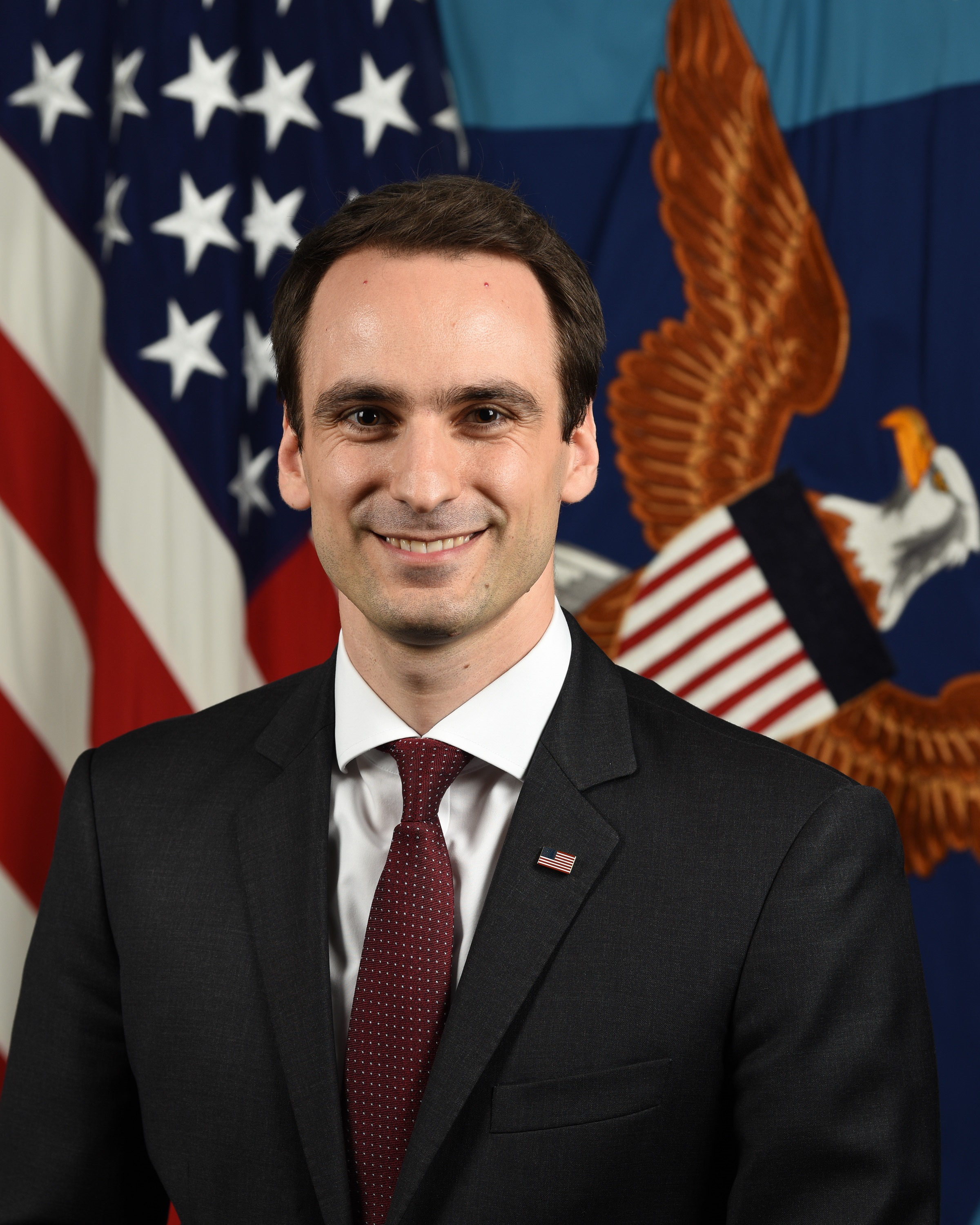
Michael Kratsios
Frontier Insights
Frontier Thesis
AI dominance hinges not merely on algorithmic models, but on industrializing the entire technological stack: pairing 2026 agentic coding breakthroughs and autonomous scientific discovery with physical power, domestic manufacturing, and rapid-market policy missions.
Strategic Decisions
Leverage regulatory policy and targeted national mandates to artificially spur tech-stack demand. Secure global ecosystem market share by exporting full-stack American infrastructure—semiconductors, data centers, and scientific platforms—while modernizing frontline industrial capacity.
Risks & Warnings
Execution risks severe fragmentation under conflicting state-level regulations. Success remains bottlenecked by power grid economics, debt constraints, bureaucratic delays, and geopolitical pushback.
Key Views & Dialogues
How the White House Plans to 10x Scientific Productivity | Michael Kratsios | EP #276
- 🗓️ Date:
2026-08-04| 🎙️ Show:Moonshots
Michael Kratsios frames regulation as a market catalyst for technologies “born in captivity,” while national missions aim to create demand across AI, chips, robotics, quantum computing, and space. The Golden Age blueprint targets 10x scientific productivity through five-year grants, autonomous laboratories, public datasets, and AI-native research markets, with export financing and semiconductor controls shaping competition; execution and public acceptance remain key risks.
View Dialogue Notes & Key Takeaways
Kratsios divides technology into products “born free” or “born in captivity.” Internet-like technologies need government restraint; commercial drones and AI medical diagnostics need affirmative rule changes before customers can realize their value. For investors, regulation is therefore both a bottleneck and a market-making catalyst.
Washington’s ambition is moving from AI adoption toward national-scale demand creation: humans back on the Moon in 2028, initial lunar-base elements by 2030, a space nuclear reactor by 2028, a scientifically relevant quantum computer by the end of Trump’s term, and AI-driven science through the Genesis Mission. Kratsios said Genesis should probably aim for 10x scientific productivity, not the publicly stated 2x: “We have to aim big. We have to do 10x.”
The administration wants leadership in both closed and open models, but Kratsios concedes that Chinese open-source models are well-performing and currently cheapest. The American AI Exports Program aims to counter that advantage with turnkey packages spanning chips, models, applications, and government-backed financing—a deliberate effort to ensure that “the world should build on America’s AI and tech stack.”
Kratsios strongly defends semiconductor controls, calling the 2019 restrictions on EUV lithography “probably one of the most impactful export controls” in US history. Diamandis argued that restrictions can incubate foreign competitors; Kratsios’s answer was that China already treated semiconductor independence as a strategic priority, while controls throttled its ability to match US frontier systems.
The Golden Age blueprint treats scientific stagnation as an incentive-design failure, not principally a shortage of money: NIH approaches $45 billion, yet researchers reportedly spend about 45% of their time on grant-related administrative work. Proposed repairs include five-year awards, applications reviewed within a month, unilateral “golden tickets” for unconventional proposals, dedicated meta-science units, prizes, and four-year industry-linked PhDs.
The most radical proposal is an AI-native scientific marketplace where funders post bounties, agents identify leads and hire autonomous labs, cryptographically signed results trigger smart-contract payments, and prediction markets guide resources. Humans would still choose the questions and judge the most consequential results, but coordination and experimentation could run continuously “at machine speed.”
Robotics, autonomous laboratories, data centers, and public scientific datasets form the investable physical layer. Kratsios described new limits on non-US humanoid imports, federal support for closed-loop robotic labs, and a requirement that data-center builders “build, bring, or buy” their own power; meanwhile, 70 years of national-lab data should become AI-ready and remain a public good, analogous to NOAA weather data.
🔗 Original source & video: How the White House Plans to 10x Scientific Productivity | Michael Kratsios | EP #276
Inside America’s AI Strategy: Infrastructure, Regulation, and Global Competition
- 🗓️ Date:
2026-01-23| 🎙️ Show:All-In
Every deployed GPU is generating tokens, unlike dark fiber, while coding agents are lifting demand and contributed about 2% to GDP growth last year. Returns depend on data centers funding their own power and national rules reducing startups’ 50-state compliance burden. Monitor 2026 agent monetization and whether American chips and models win global ecosystem share amid financing, energy and political-control risks.
View Dialogue Notes & Key Takeaways
Sacks rejects the dot-com analogy because today’s accelerator capacity is already being used: “There’s no such thing as a dark GPU right now.” Every GPU being put into a data center is generating tokens, while recent coding tools are pushing demand higher. He says AI infrastructure added about 2% to GDP growth last year and helped propel a 4%-5% growth rate, though Bartiromo presses the unresolved risk that borrowing could leave banks holding the bag.
The AI infrastructure race has become a power race, with the administration insisting data centers “pay their own way” through behind-the-meter generation. Microsoft has pledged its facilities will not raise residential electricity rates, and Sacks expects peers to follow. He argues new generation could actually lower rates by selling excess power and spreading fixed costs across greater supply—but only if data centers contribute rather than merely plug into the grid.
A lightweight national AI standard is meant to prevent state-by-state rules from becoming a moat for incumbents. Kratsios argues early-stage companies bear the greatest cost of navigating 50 rulebooks, while large platforms can absorb it. Child safety and data-center permitting could remain state matters. Sacks cites 1,200 state-level bills, while earlier citing more than 200 bills moving through state legislatures; congressional preemption requires a substantive replacement—“you can’t replace something with nothing”—and 60 Senate votes.
The near-term monetization call is a 2026 productivity boom as coding agents become tools for every knowledge worker. Sacks points to Claude Code, powered by Anthropic’s Claude Opus 4.5, and its Cowork interface for producing spreadsheets, PowerPoints and websites from a user’s files and email. Add one abstraction layer and voice, he argues, and task-based agents become personal digital assistants resembling Her.
Kratsios sees AI for science as a potentially larger productivity unlock than chatbots. The Genesis Mission aims to make use of 50-60 years of national-lab research and other fragmented scientific data so models can choose experiments, assess failures and iterate faster. His ambition is to “almost double” US R&D output over 10 years, with fusion simulations, advanced materials and therapeutic molecule selection as leading applications.
America leads deeper down the AI stack, but the decisive five-year metric is global market share rather than benchmark rankings. Sacks estimates US models are roughly six months ahead, chips two years ahead and semiconductor equipment perhaps five years ahead; Kratsios puts the frontier-model lead at six to 12 months. If American chips and models power the world, the US won; if Huawei chips and DeepSeek models do, it lost—“biggest ecosystem wins.”
The panel’s principal downside case is political control of AI, not a Terminator-style machine revolt, while mass unemployment remains disputed. Sacks warns of “Orwellian” surveillance, censorship and embedded political bias, while saying private companies probably have First Amendment rights to build biased systems even as the federal government refuses to procure them. He calls Musk directionally right about abundance but rejects near-term universal joblessness or a moneyless economy: “The timelines matter a lot.”
🔗 Original source & video: Inside America’s AI Strategy: Infrastructure, Regulation, and Global Competition
Winning the AI Race Part 1: Michael Kratsios, Kelly Loeffler, Shyam Sankar, Chris Power
- 🗓️ Date:
2025-07-23| 🎙️ Show:All-In
Washington’s 90-action AI plan links innovation, data centers, energy, manufacturing, and global ecosystem reach to national security, with actions targeted for completion within six to nine months. The bottleneck is shifting from model intelligence to physical capacity, with Hadrian reporting 4x manufacturing productivity, 10x workforce productivity, 30-day training, and an Arizona factory planned at four times Los Angeles’s size. Energy efficiency, worker-led deployment, small-business adoption, fragmented state regulation, and offshore competition remain key catalysts and risks for the reshoring thesis.
View Dialogue Notes & Key Takeaways
Washington’s 90-action AI plan treats innovation, physical infrastructure and global ecosystem reach as one national-security strategy. Jacob Helberg laid out the plan’s pillars: America must out-innovate competitors, accelerate data centers, energy and domestic manufacturing, then create the AI stack for the world. The plan targets actions achievable within six to nine months because “you can’t regulate your way to winning the AI race.”
The investable bottleneck is shifting from model intelligence to power, permitting, machine tools and skilled labor. Michael Kratsios wants federal scientific data made usable, not merely open, while warning that AI will enter regulated products from drones to medical diagnostics. Jacob Helberg separately flagged more than 1,000 proposed or enacted state measures as a potential path toward “a patchwork of 50 different state regulatory regimes.”
Hadrian’s factory results support the episode’s central labor thesis: AI can create industrial capacity where qualified workers no longer exist. Chris Power reported 4x manufacturing productivity, 10x workforce productivity and 30-day training for recruits entirely from non-factory backgrounds; the company’s Arizona expansion is planned at four times the Los Angeles facility’s size with 350-plus jobs. “Hadrian’s advanced factories look and operate more like a data center.”
Gecko Robotics reframed energy as both AI’s constraint and one of its highest-return applications. Jake Loosararian’s example began with a 620-megawatt plant producing only 580; robotic inspection and AI reportedly unlocked 1% efficiency, which he extrapolated to 11.9 gigawatts across the US thermal fleet “without putting a shovel in the ground.” His call: “AI shouldn’t just consume, it should create energy.”
Palantir’s Shyam Sankar sees the strongest adoption where frontline workers author the applications and institutional leadership releases their agency. He wants workers made 50 times, not merely 50%, more productive; cited factory training falling from three years to three months; and described a four-week fellowship for mechanically intuitive, often self-taught workers. His categorical conclusion was that “the traditional college degree is dead.”
Paul Buchheit’s abundance case is that natural language expands the pool of builders, while capital intensity preserves scarcity at the model layer. With only 2%-3% of Americans able to code—and perhaps half that number capable of building a startup—“English is the new programming language” could produce 10x or 100x more startups, robotics companies and local applications. Buchheit expects the number of foundation-model providers to remain relatively stable, with open source constraining censorship and lock-in among closed vendors.
Small businesses are positioned as AI’s distribution channel, but the resulting market may be a barbell rather than a universal uplift. Kelly Loeffler said 60% of the SBA’s $21 billion lent this year went to companies with one to five employees; Keith Rabois expects those firms to gain incumbent-grade information, products and administration, then take share from the mid-market while compute leaders such as NVIDIA also benefit. The counterweights are energy and materials costs, industrial supply-chain exposure, rigorous underwriting and Power’s warning that offshore competition remains “companies versus the CCP.”
🔗 Original source & video: Winning the AI Race Part 1: Michael Kratsios, Kelly Loeffler, Shyam Sankar, Chris Power