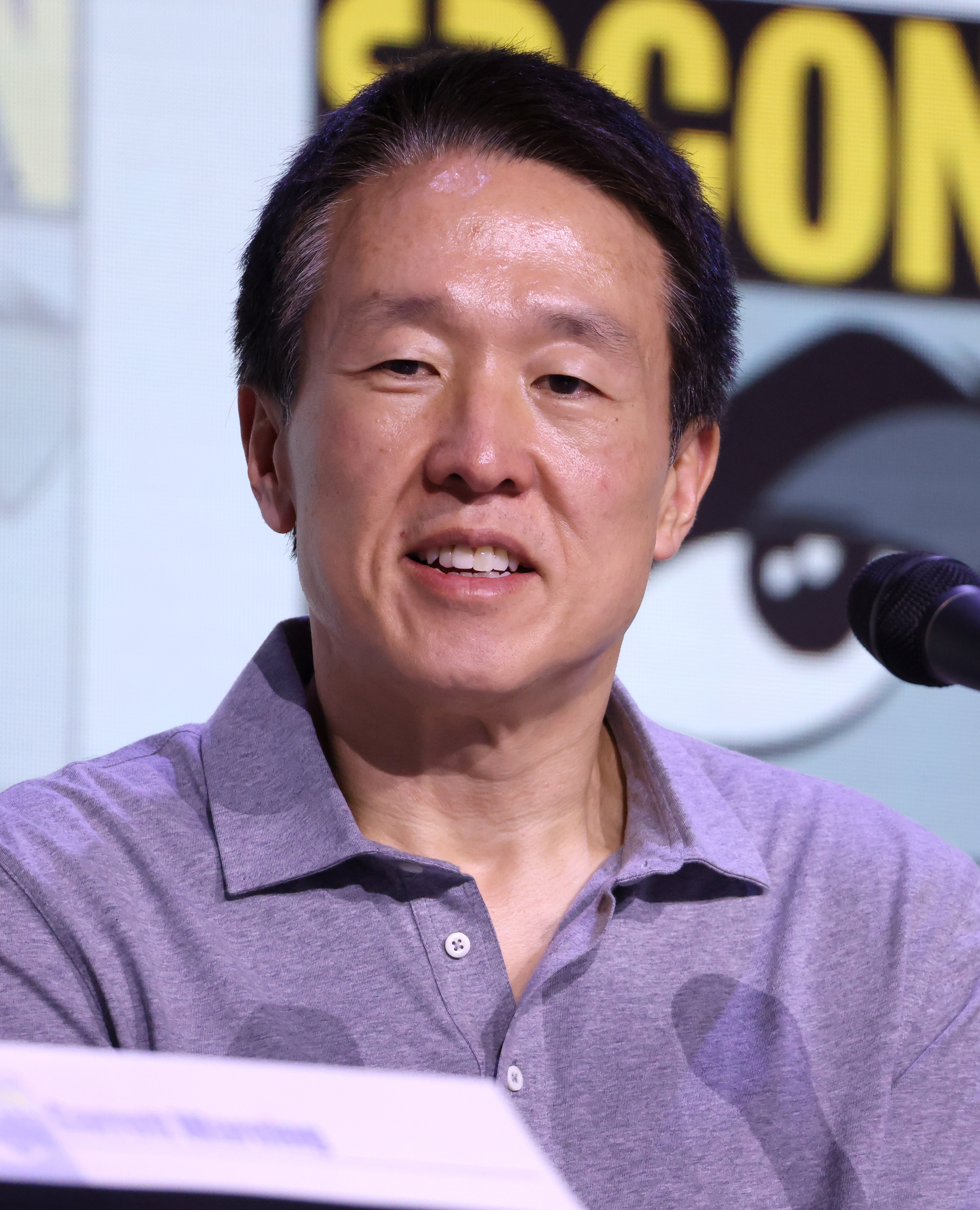
Roy Lee
Frontier Insights
Core Thesis: Cluely bets on an ambient, “always-on” desktop overlay that captures continuous user context, prioritizing weaponized viral distribution over premature product perfection to aggressively seize category ownership.
Strategic Playbook:
Industrialize growth via mercenary creator networks, normalize stealth AI assistance judged strictly by output, and build habitual muscle-memory shortcuts (Cmd+\) to transition fleeting viral traction into proprietary enterprise workflow moats.
Risks & Warnings: Thin UI moats invite rapid commoditization. Long-term viability hinges on converting controversial, cheat-adjacent use cases into trusted enterprise utility before mounting talent costs, hiring-integrity backlash, and ethical scrutiny break adoption.
Key Views & Dialogues
Cheat on Everything: Cluely’s Vision for Always-On AI Assistance
- 🗓️ Date:
2025-07-05| 🎙️ Show:The Cognitive Revolution
Cluely is pursuing an always-on desktop layer that turns Command-Backslash into a habitual AI interface, using system audio, microphone access and accumulated context to evolve toward a personalized Jarvis. Its AI-maximalist positioning judges economic work by output, while its distribution engine combines human-produced video, sub-10-second UGC clips reaching 5 million views and compensation packages up to $1 million plus equity; trust and human effort remain unresolved exceptions.
View Dialogue Notes & Key Takeaways
Cluely is betting that the winning consumer-AI interface is an always-on desktop layer, not a destination chatbot. Its translucent overlay has access to system audio and the microphone, then supplies notes, definitions, questions, and suggested replies; native Mac screenshots omit it, although Mac screen recordings capture it. The strategic objective is a “land grab” for the Command-Backslash habit, eventually accumulating enough context for a multimodal model to reason over “one year of everything” and become a personalized Jarvis.
Roy Lee’s doctrine is AI maximalism: use AI whenever it improves output because today’s models are “the stupidest models we will ever use.” He rejects a blanket rule requiring AI to identify itself, calling it unenforceable and arguing that AI-assisted economic work should generally be judged by results. He makes a narrower exception for cases where human effort itself is the intended output, such as a sentimental gift.
The company’s mission rests on a highly binary view of AI progress. In Lee’s upside case, superintelligence eliminates cancer and Alzheimer’s, extends lives from roughly 80 to 800 years, makes output effectively infinite, and frees people to pursue intrinsically meaningful work; in the fallback, AI merely automates “10–20% of white-collar jobs” and leaves life about 20% better. He admits these projections deserve “less than a grain of salt,” yet argues that even a 10% productivity lift would equal roughly “700 million human beings’ worth of productivity.”
“Cheat on everything” resonates because Lee sees young people losing faith in the school-to-prestige-job bargain. He claims 95–99%, “if not fully 100%,” of Columbia students have used AI to cheat on an exam or assignment, while graduates face what he described as a 30% unemployment rate. His own conversion story—publicly using an invisible assistant to get an offer through Amazon’s interview process, being suspended by Columbia, and saying he “would have rather died than apologize”—turns institutional conflict into a founding story for Cluely.
Lee wants employers to replace proxy tests and one-page résumés with AI analysis of demonstrated work. An AI should inspect a candidate’s portfolio, verify claims, identify precise deficiencies, and perhaps score someone as a “76 out of 100 candidate”; any assignment AI can complete should disappear. His qualification is important: “cheating” cannot remove every learning requirement, so people should take every AI-enabled jump, then backfill whatever mathematics, coding, or domain knowledge the final unsolved step demands.
Erik Torenberg’s strongest pushback is that output alone cannot govern romance, gifts, public discourse, or trust. Lee ultimately concedes that some outputs are valuable precisely because of “human input”: an AI-generated Father’s Day drawing passed off as handmade would fail because effort was the intended product. His narrower conclusion is that undisclosed automation should generally be acceptable for economic production, while sentimental connection remains an enduring exception.
Cluely is pairing countercultural positioning with unusually deliberate distribution and talent spending. Its in-house team uses human videographers, lighting, cameras, and editors because AI cannot yet match their output, while using AI for scripts and storyboards; separate sub-10-second UGC clips can reach 5 million views among 16–20-year-olds. Lee advertised packages up to $1 million plus equity, reasoning that premium compensation wins attention first and an intense “frat house” culture earns loyalty later.
🔗 Original source & video: Cheat on Everything: Cluely’s Vision for Always-On AI Assistance
Building Cluely: The Viral AI Startup that raised $15M in 10 Weeks w/ Roy Lee
- 🗓️ Date:
2025-06-25| 🎙️ Show:The a16z Show
Cluely is testing whether distribution can discover product-market fit faster than conventional development, using more than 1 billion views and sales-call videos that Roy says generated over $1 million in enterprise revenue. Its translucent screen-and-audio overlay targets an emerging AI interface, while follower-based hiring and paid creator production industrialize acquisition; the unresolved risk is that technically simple features are copied before the land grab becomes durable.
View Dialogue Notes & Key Takeaways
The episode opens with Erik Torenberg saying Elon is reaching out and Meta is offering a $1 billion acquisition offer. Roy Lee responds that six months earlier he was a random college kid in a dorm and now feels at the center of tech, while the more astonishing development is how correct his virality assumptions have been.
Cluely’s central bet is that distribution can discover the product faster than traditional product development can discover demand. The team wrote its first code 10 weeks before the episode, launched with a barely functioning product, and inserted sales calls into its videos as a test; Roy says that experiment produced “over a million dollars of enterprise revenue coming in.” With more than 1 billion Cluely views, aggregate usage now points the team toward its stickiest uses and product direction.
The discussion frames Twitter as roughly two years behind Instagram and other platforms in understanding short-form virality, while Roy’s broader claim is that people on X and LinkedIn are behind. Those platforms reward accessible, controversial content, while tech creators optimize for intellectual status and produce material “maybe like 200 people in the world can actually understand.” His supposedly extreme videos are less controversial on Instagram or TikTok, where creators compete with content insinuating public felonies.
Cluely has reorganized marketing around demonstrated algorithmic mastery rather than conventional credentials. Bryan Kim puts Roy in roughly the top 0.1% in the world at distribution. Every full-time employee has over 100,000 followers on some social platform, while more than 60 contractors are paid per video to produce clips—including batches of five 10-second videos—that can generate millions of views. Roy’s provocation: if a head of marketing lacks 100,000 followers, “you need to replace them.”
Bryan backed Cluely after seeing it turn attention into dollars, but his larger thesis required moving beyond his old consumer-investing framework while retaining some belief in its core. He previously favored slowly crafted products with retention and network effects; rapidly changing AI models made that insufficient because an incumbent’s next release can erase a feature. In this phase, founders must enjoy “building the plane as it’s falling down the cliff,” making momentum across product and distribution the current moat.
The product thesis is that AI should inhabit a translucent overlay that sees the screen and hears audio, not remain trapped in a separate window. The UX emerged from 20–30 Interview Coder iterations, when Roy and co-founder Neil needed to view generated code and their own work simultaneously. Roy frames Cluely as “pre-launch”: saturate the market with the category now, then release the fuller product to an audience already primed to associate invisible AI with Cluely.
Roy concedes the overlay is technically simple and likely to be copied, so defensibility currently rests on winning a land grab. He argues Cluely might distribute better than OpenAI and says there is enough of a case to “probably bet on us” at roughly a “30,000× discount,” while controversy makes its marketing anti-fragile: attacks create supporters, opponents, and more attention. His guardrails are narrower than “triple down on everything”—“never punch down,” remain authentic, and let genuine respect remain visible.
🔗 Original source & video: Building Cluely: The Viral AI Startup that raised $15M in 10 Weeks w/ Roy Lee
A.I. Action Plans + The College Student Who Broke Job Interviews + Hot Mess Express
- 🗓️ Date:
2025-03-21| 🎙️ Show:Hard Fork
AI labs are seeking copyright and liability latitude by framing China as an existential threat, while Interview Coder monetizes the collapse of remote coding interviews with several thousand users and nearly $200,000 in monthly revenue. The investable signals span data-center power, infrastructure, security and skilled trades, but unresolved policy safeguards, adverse selection in hiring and verification risks remain catalysts and constraints.
View Dialogue Notes & Key Takeaways
The major AI labs used Washington’s action-plan process to seek legal latitude: broad rights to train on copyrighted work, federal preemption of state AI rules, more energy, and fewer constraints. OpenAI warned that without “carte blanche” on training data, it would immediately lose the AI race to China; Meta said Trump should issue an executive order, while more than 400 Hollywood artists argued that destroying creative incentives would erode US cultural leadership. The investor hinge is whether Washington or the courts reduce copyright and liability exposure—and whether preemption would come with federal safeguards.
The labs’ industrial policy is essentially “Leave us alone, or else,” with DeepSeek R1 supplying the threat. Kevin Roose saw a genuine national-security concern alongside a calculated attempt to hobble a competitor; Casey Newton noted that Meta promotes open-weight AI as an antidote to Chinese influence even though Chinese researchers reportedly used Llama for military applications. Neither host dismissed China risk, but both flagged how neatly it supports incumbents’ preferred policy.
The concrete opportunities sit in power, data-center construction, security, and skilled trades—not a federal Manhattan Project for AI. Proposals included “special compute zones” with easier infrastructure permitting, using 529 plans for credentials such as HVAC training, stronger defenses against model-weight theft, and model kill switches. Yet labs omitted the larger social programs their leaders have discussed—UBI, proof of personhood, fusion—and translated “AI safety” into the Trump-friendlier language of national security.
Interview Coder turns a broken hiring signal into a fast-growing business by making AI assistance invisible during remote coding interviews. Columbia sophomore Roy Lee said the overlay screenshots a LeetCode prompt, asks ChatGPT to solve it, remains hidden from screen sharing, and positions the answer over the candidate’s code; he trial-ran it with Meta, Capital One, TikTok, and Amazon. After just under 50 days, it had several thousand users, “not a single reported instance” of detection, and revenue closing in on $200,000 for the month—roughly a $2 million-$3 million annual pace.
Roy’s defense is that LeetCode tests memorization, not engineering, although the hosts raised the obvious adverse-selection risk. He spent 600 hours reaching the top 1% and estimated only the first 20 questions or 10 hours had utility; thereafter the exercise was as relevant as “how many jumping jacks can you do” to podcasting. His preferred replacement is an open-ended assignment where candidates use every normal tool, including AI code editors, and are judged on what they deliver.
AI coding is already altering how engineering talent is produced and evaluated, but Roy does not think expertise has vanished yet. He estimated AI could make a strong coder 10 to 100 times more efficient and claimed that the proportion of Columbia computer-science students almost solely using AI to code was “close to 100%,” while conceding that losing fundamentals “could end up being dangerous.” He said the future is one where almost all cognitive load is offloaded to LLMs—and Kevin’s broader conclusion was that remotely administered professional tests across industries now face the same verification problem.
Solana’s withdrawn 2025 Accelerate ad created brand risk without making a case for the underlying product. Its culture-war therapist sketch culminated in “I want to invent technologies, not genders,” prompting even crypto supporters to call it “horrendous” and “so fucking tone-deaf.” Casey’s diagnosis: when the ad says nothing about crypto’s utility and instead starts “a culture war over something completely irrelevant,” deletion becomes an unmistakable hot mess.
Two smaller messes expose real operating risks: emotionally primed AI therapists and alleged corporate espionage through Slack. A study found that trauma narratives changed ChatGPT-4’s reported “anxiety” and subsequent outputs, while mindfulness prompts reduced but did not reset it—no sentience implied, but a design issue as therapy use expands. Separately, Rippling alleged that rival Deel hired a mole to harvest Slack information; a successful honeypot, a locked bathroom, a possibly flushed phone, and Deel’s denial of legal wrongdoing earned the episode’s “nuclear mess” rating.
🔗 Original source & video: A.I. Action Plans + The College Student Who Broke Job Interviews + Hot Mess Express