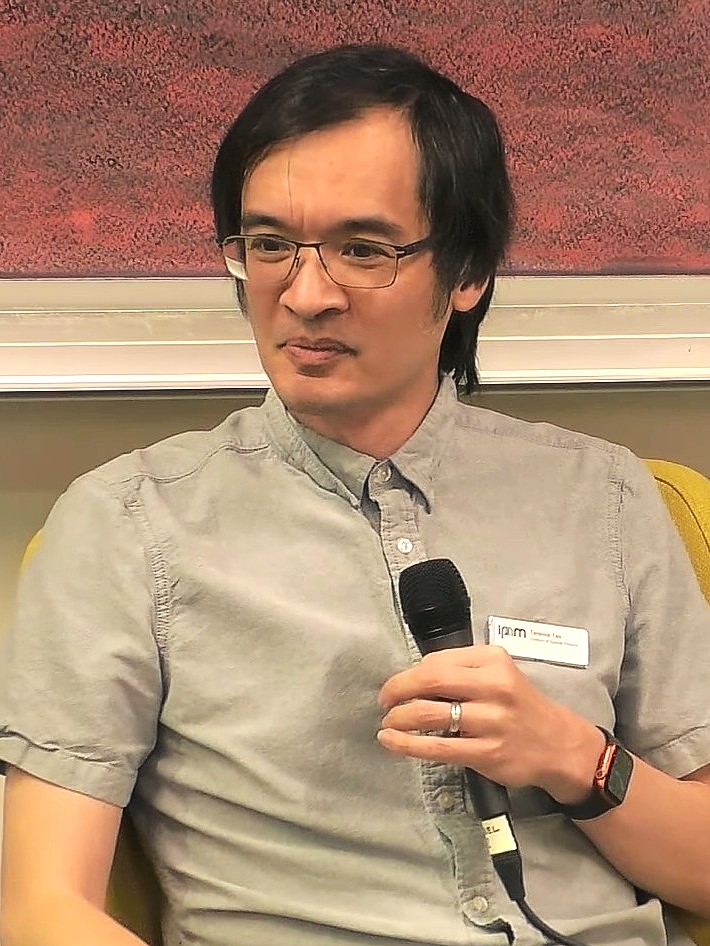
Terence Tao
Frontier Insights
Core Thesis: AI collapses idea generation costs to near zero, shifting the scientific bottleneck entirely to verification. Interactive theorem provers (Lean) are positioning to become the trust layer of mathematical infrastructure, but true autonomy remains blocked by lack of cumulative learning and deep reasoning.
Strategic Decisions: Treat AI strictly as workflow leverage—for broad exploration, fast code refactoring, and assisted proof checking—rather than an autonomous discovery engine. Human-AI collaboration remains dominant until formalization costs drop below manual proof efforts.
Risks & Warnings: AI hits sharp performance plateaus on non-trivial problems; over-relying on superficial breadth without formal verification threatens rigor, while foundational structural breaks (e.g., Riemann Hypothesis falsification) carry catastrophic downstream cryptographic risks.
Key Views & Dialogues
Terence Tao – How the world’s top mathematician uses AI
- 🗓️ Date:
2026-03-20| 🎙️ Show:Dwarkesh Podcast
AI has driven idea-generation costs toward zero in mathematics, shifting the scarce resource to verification as journals face floods of submissions and human peer review cannot scale to 1,000 theories a day. Roughly 50 of 1,100 Erdős problems were solved with AI assistance before a plateau, while Tao reports 5x gains in auxiliary work but little core improvement, making scalable benchmarks, cumulative learning, and cryptography risks the next signals to monitor.
View Dialogue Notes & Key Takeaways
Tao’s core call for anyone underwriting AI-for-science: idea generation now costs ~zero, verification is the bottleneck. “AI has driven the cost of idea generation down to almost zero, in a very similar way to how the internet drove the cost of communication down to almost zero. It’s an amazing thing, but it doesn’t create abundance by itself” — journals are already flooded, human peer review doesn’t scale to a thousand AI theories a day, and “that’s not something we know how to do at scale.”
The Erdős-problem scoreboard is the cleanest live benchmark: ~50 of ~1,100 solved with AI assistance, then a plateau. Three separate attempts to have frontier-model AIs attack every problem simultaneously produced no new pure-AI solutions; systematic studies show a 1–2% per-problem success rate — “they can buy scale, and you just pick the winners.” Expect the same publicity dynamic on prestigious open problems, and standardized benchmarks are needed rather than relying on AI companies to disclose negative results.
Tao’s own productivity number is a caution against headline multipliers: ~5x on auxiliary tasks (plots, literature search, formatting), little change on the core — “the core of what I do, actually solving the most difficult part of a math problem, hasn’t changed too much. I still use pen and paper for that.” Papers are “richer and broader, but not necessarily deeper.”
His diagnosis of the missing ingredient: current systems are artificial cleverness, not yet the kind of intelligence he describes — jumping machines that leap two meters but “can’t jump a little bit, reach some handhold, stay there, pull other people up.” No cumulative learning across sessions; hence his timeline call that “hybrid human plus AIs will dominate mathematics for a lot longer,” requiring “additional breakthroughs beyond what we already have.”
The bullish flip Dwarkesh lands and Tao accepts: AI breadth is qualitatively new — once models reach a waterline they clear every problem at that height simultaneously, which humans can’t do. Tao: redesign science around breadth, run experimental math on thousands of problems at once — “the idea of doing mathematics at scale is at its infancy… and then science will be unrecognizable after that, I think.”
A concrete tail-risk worth knowing: mathematicians believe the Riemann hypothesis via the “random model of the primes,” and if RH were false, “I think we would very rapidly abandon any cryptography based on the primes” — one unknown pattern would probably imply more, and patterns mean exploits.
Track record check: Tao’s 2023 prediction that by 2026 AI would be “a trustworthy co-author if used correctly” is “looking pretty good in retrospect.” Forward call: within a decade, a lot of what math students currently do—and a lot of what goes into papers today—can be done by AI — but as with human computers and $1,000 genome sequencing, “we moved on. You move to a different scale.”
🔗 Original source & video: Terence Tao – How the world’s top mathematician uses AI
Terence Tao: Hardest Problems in Mathematics, Physics & the Future of AI | Lex Fridman Podcast #472
- 🗓️ Date:
2025-06-15| 🎙️ Show:Lex Fridman Podcast
Lean could become the trust layer for scalable mathematics, despite formalization currently taking Tao roughly 10 times longer than writing proofs by hand. The Equational Theories Project tested about 22 million implications across roughly 4,000 algebraic laws, while AI supplies perhaps “30, 40%” of mathematical skills but still lacks reliable judgment; adoption could accelerate once formal-first workflows fall below the 1× effort threshold.
View Dialogue Notes & Key Takeaways
Lean could become the trust layer that turns unreliable AI into scalable mathematical infrastructure. Formalizing a proof currently takes Tao roughly 10 times longer than writing it by hand, but certificates enable “trustless mathematics,” atomic collaboration, and safe refactoring: changing a theorem’s constant from 12 to 11 left 90% of thousands of lines intact and exposed only the broken dependencies. His phase-change threshold is below 1×, when formal-first papers, faster refereeing, and a potentially exponentially growing mathlib become the default workflow.
Near-term AI value lies in workflow leverage, not autonomous discovery. AlphaProof’s silver-medal-equivalent IMO performance was impressive but required human formalization and roughly three days of Google server time for one high-school problem; proof search still deteriorates exponentially with length. Current tools can supply perhaps “30, 40%” of mathematical skills—coding, calculation, search, autocomplete—but lack the human “sense of smell” that detects a beautiful-looking argument built on a stupid error.
Formal verification already lets research operate at a scale conventional publishing cannot support. Tao’s Equational Theories Project generated about 22 million implication problems among roughly 4,000 algebraic laws; around 50 contributors settled all but two, and a pen-and-paper proof for one of the remaining cases was being formalized. The emerging model resembles a modern supply chain: a blueprint decomposes one theorem into independently verifiable nodes, opening research to distributed specialists, students, programmers, and eventually AI agents.
Navier–Stokes is fundamentally a tail-risk problem: ordinary water behaves well, but mathematics must eliminate every engineered catastrophe. Tao’s averaged equation demonstrates a finite-time energy cascade by selectively closing interaction channels, proving that conservation of energy and viscosity alone cannot establish regularity. His more speculative route is a self-replicating “water-punk” computer that transfers its energy into progressively smaller copies—physically unbuilt, error-prone, but not obviously forbidden by the equations.
The episode’s most investable modeling lesson is that elegant averages fail when correlations become systemic. Universality compresses roughly (10^{23}) gas particles into a handful of variables, and Gaussian laws work when many inputs are sufficiently independent; 2008 showed what happens when mortgage defaults move together instead. Tao’s test is blunt: a model with 10 parameters explaining 10 observations is useless, while a compact theory explaining petabytes of observations earns credibility—but only within its stated assumptions.
The famous number-theory problems sit at sharply different distances from available tools. Bounded-gap methods prove infinitely many prime pairs separated by at most 246, but twin primes require reaching the 50% “parity barrier”; Tao expects substantially closer partial results within 10 years, not necessarily a complete proof. He sees the Riemann hypothesis as needing something “out of left field,” Collatz as vulnerable to one engineered exception despite 99%-type results, and P versus NP as leaning toward inequality while carrying unusually many no-go theorems.
Human advantage remains problem selection, conceptual compression, and productive collaboration across styles. Tao identifies as a fox who imports tools between fields, while hedgehogs command one domain deeply; the best teams combine both. His durable career advice follows the same logic: learn transferable abstraction and problem-solving, try something even when no standard method applies, and treat failures as information—because future tools will automate routines faster than they automate judgment.
🔗 Original source & video: Terence Tao: Hardest Problems in Mathematics, Physics & the Future of AI | Lex Fridman Podcast #472