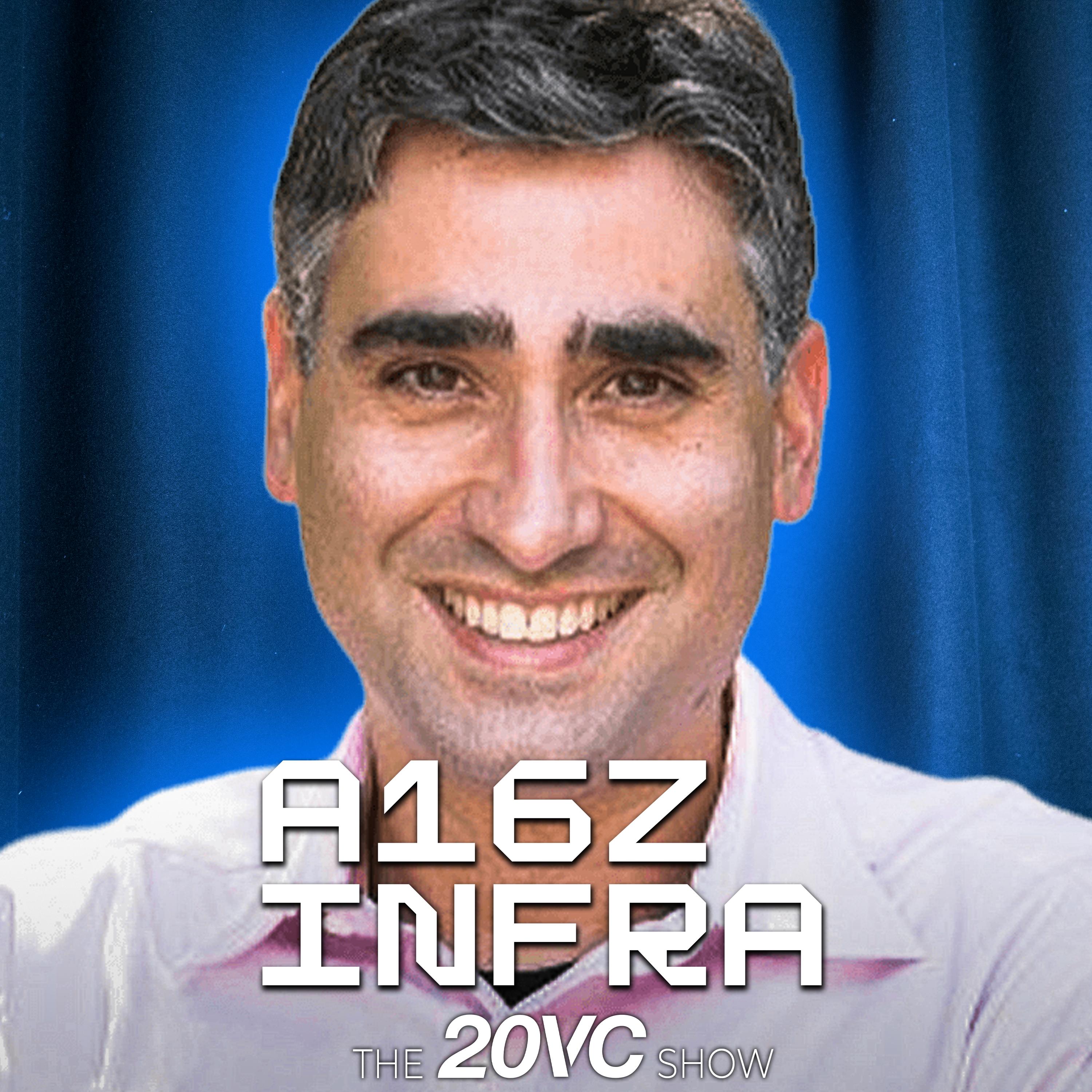
Venky Ganesan
Key Views & Dialogues
20VC: Is Seed Investing Dead Without a $1BN Fund? | Does Ownership and Price Matter When Companies Can Be $1TRN Exits | Are AI Revenue Numbers Real and What to Watch Out For with Venky Ganesan, Menlo Ventures
- 🗓️ Date:
2026-10-05| 🎙️ Show:20VC
AI seed investing remains viable as an option strategy, but Menlo Ventures concentrates only after revenue and quantifiable evidence emerge, amid neo-labs and $10–20 million application rounds. With metrics vulnerable to gaming and a 10% seed stake potentially diluting to 3.5–4%, Venky says venture must beat the “Mag Seven” by roughly 1,000 basis points; vintage risk remains.
View Dialogue Notes & Key Takeaways
Venky Ganesan’s answer to an overheated AI market is to keep playing, but change position size rather than pretend anyone can time the turn. Firms that exited dot-com investing in 1996–97 missed 1997–99 and returned in 2000; today, each seed check is “an option to see if it’s an outlier,” with concentration added only after revenue and quantifiable evidence arrive. “A dot is not a line.”
Seed still exists, but core AI “neo-labs” and $10–20 million application rounds make traditional small-fund construction brutally difficult. Menlo uses some seed checks to buy a seat at the table and is therefore “somewhat indifferent” to the initial valuation, expecting the real capital deployment to come after winners reveal themselves. For $30–100 million funds that need $1–3 million allocations, the high-stack poker table is a punishing place—though exceptional managers can still win.
AI revenue must be underwritten as a business reality, not accepted as a fundraising artifact. Harry flags contracted “annual” revenue that is neither live nor annual and run rates extrapolated from the best day of sales; Venky’s rule is that “if any metric is measured by an investor and they put a lot of weight on it, it’s gonna be gamed.” The decisive distinction is whether founders optimize for terminal value or the next markup.
Price and ownership matter, but neither can be judged without outcome size, evidence and access. Venky would rather own 2% of a trillion-dollar company than 20% of a $100 million company; Menlo owns less than 2% of Anthropic yet has laddered its investment until Anthropic reached 20% of one Menlo fund. Once an outlier is obvious, “there’s no alpha there”—the game becomes access and position sizing—so early ownership remains valuable.
Outcome inflation cannot excuse weak portfolio mathematics because time and dilution compound against the investor. Menlo models a seed position falling from 10% to roughly 3.5–4% by exit, or about 60% dilution; slow companies also damage IRR and require more financing and option-pool expansion. Because AI companies pay economic “taxes” to Nvidia, hyperscalers and foundation models, Venky says private venture must beat the accessible “Mag Seven” by roughly 1,000 basis points to justify fees, carry and illiquidity.
Strategic-acquisition “downside protection” is dangerous because buyers have no obligation to protect the cap table. Venky compares today’s confidence with dot-com acquisitions of pre-product companies and asks why a strategic acquirer would honor the cap table when it might hire the founders directly. At 30–50x, he favors selling perhaps 10–15% to lock in gains and enable a longer hold, but Menlo generally will not sell its entire position while remaining aligned with the founder.
AI’s capital intensity can justify faster deployment, but it does not repeal vintage risk. Menlo Eight invested across roughly ten months in 2000–01 and remains the firm’s only fund that has not returned capital; its $1.5 billion Menlo Nine and $1.2 billion Menlo Ten also underperformed expectations and drove LP departures. LPs now want DPI, yet many also need AI exposure as a hedge against software-heavy private-equity portfolios threatened by AI.
The durable edge Venky claims is institutional humility: remove ego, allocate capital well and keep running. He will accept a smaller allocation or a higher-priced tranche if it can make money for LPs—“the rest of this is all noise”—and tells LPs to evaluate the windshield by interviewing founders, not merely study five-to-seven-year-lagging performance. His closing principle: “There’s no limit to what a person can do as long as they don’t care who gets the credit.”
🔗 Original source & video: 20VC: Is Seed Investing Dead Without a $1BN Fund? | Does Ownership and Price Matter When Companies Can Be $1TRN Exits | Are AI Revenue Numbers Real and What to Watch Out For with Venky Ganesan, Menlo Ventures