Enterprise Multi-Agent Orchestration Architecture
Exploring agent collaboration, authorization frameworks, and implementation across enterprise workflows.
1 sourcesVoices in this topic
All paragraphs
Oct 27, 2026
Oct 21, 2026
Oct 12, 2026

Oct 11, 2026

Oct 8, 2026

- 张阔 Accio has expanded from AI search into agentic trade and multi-platform operations, driving overall search growth of 20%, multimodal search growth of 130%, and compressing sourcing projects from a monthly process to roughly 24 hours. An Agent can turn an idea into a design pack, match factories, obtain quotes, calculate landed cost and margin, then handle logistics, HS …
- 硅谷101 Accio draws a deliberately narrow boundary around autonomy: AI can handle cross-platform reporting, product listings, customer-service reviews, and risk alerts, while humans retain control over payments, purchasing, budgets, inventory, advertising, and product taste. “A transaction can succeed and still ultimately make your business fail,” so when multiple Agents disagree, a single unified Agent can no …
Oct 7, 2026
Oct 5, 2026
- John Collison Agent endurance remains limited despite rapid capability gains. The guest says programming agents can now work reliably for roughly “two days in a row,” but weeks, months, and years of autonomous …
- Enterprises should rent intelligence for secondary functions but own the learning loop around their differentiating workflows. The proposed operating model is not allegiance to one model; it is proprietary evaluations, correction data, permissions, and orchestration …
Oct 3, 2026
Oct 2, 2026
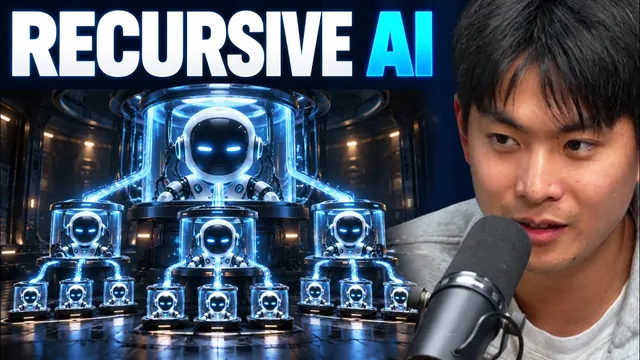
- Latent Space Prime Agent turns the RLM thesis into a framework architecture built around IPython, persistent state, and durable subagents. Every capability can be loaded as code, agents can communicate through explicit mechanisms, and the filesystem preserves context after the …
- Alex Zhang Agent swarms can now buy solutions to extraordinary problems, but their economics remain brutal and their orchestration is the actual challenge. The OpenAI effort discussed in the episode reportedly used 10,000 agents for 88 hours and produced 130 billion output tokens—about $40 …
- The largest near-term opportunity may be making today’s models reliably perform mundane, month-long work rather than waiting for another intelligence leap. Zhang believes a leading model such as Astra may already be capable of much more with the right tools, including long, simple tasks and …
- The a16z Show Trust, rather than raw model capability, determines how quickly autonomy reaches production. Lio begins with humans in the loop, absorbs company-specific feedback, and earns permission to handle “$10,000, $20,000, or $100,000” …
- Building a convincing AI demo has become radically easier, but deploying dependable automation has not. Lio’s original product—extracting a quote and entering it into SAP—once required its founding engineering team and can now be reproduced by …