Macro Impact and Evolution of AI Governance
Governance challenges, automated AI oversight, and evolving security paradigms in an age of abundance.
0 sourcesVoices in this topic
All paragraphs
Oct 14, 2026
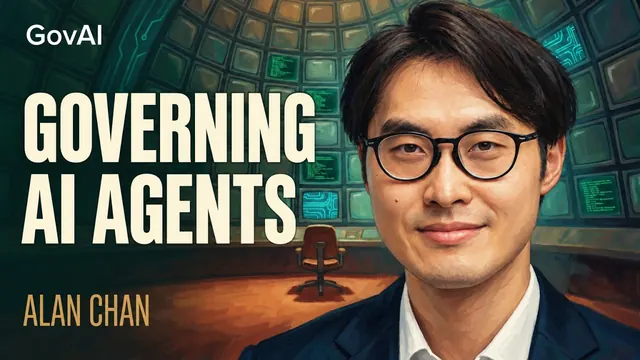
- Alan Chan Chan’s agent-governance scorecard is brutally uneven: tamper-evident logging is well-understood engineering, centralized monitoring is improving, and usable agent identity remains “basically no.” The most consequential gap is synchronous monitoring that can stop actions in real time; one recent incident reportedly occurred after cyber …
- The institutional opportunity lies in verification: insurance mutuals, memory-wiped AI auditors, and deliberately diverse AI whistleblowers could make otherwise-fragile commitments credible. Insurance enjoys an antitrust exemption and could impose shared standards, while AI auditors could inspect sensitive systems, issue a …
Oct 2, 2026
Sep 22, 2026

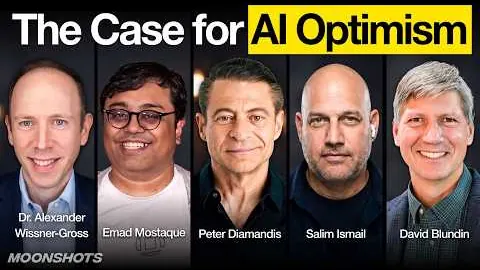
- Dr. Alexander Wissner-Gross The panel’s steerability thesis is that AI must supervise AI, with access to model activations providing the essential control surface. Dave Blundin argued that “nothing’s going to ever be able to police AI other than other AI,” while Alexander Wissner-Gross warned that …
- Their abundance conviction remains extremely high, but it depends heavily on surviving a short transition dominated by human misuse rather than autonomous takeover. Wissner-Gross put his probability above 90% beyond ten years; Peter Diamandis reached “99.9%” conditional on clearing roughly the next five …
- Regional and institutional adaptability may matter as much as model access. Ireland was proposed as a governance test bed, many other regions as faster deployment venues, and Europe as constrained by energy and …