Mindset and Psychology of Tech Founders
Dissecting psychological drivers, leadership philosophies, and management profiles of prominent tech founders.
2 sourcesVoices in this topic
All paragraphs
Oct 27, 2026

Oct 26, 2026
Oct 22, 2026
Oct 21, 2026

Oct 20, 2026
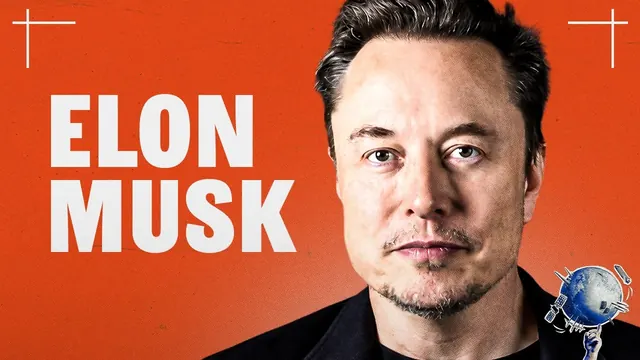
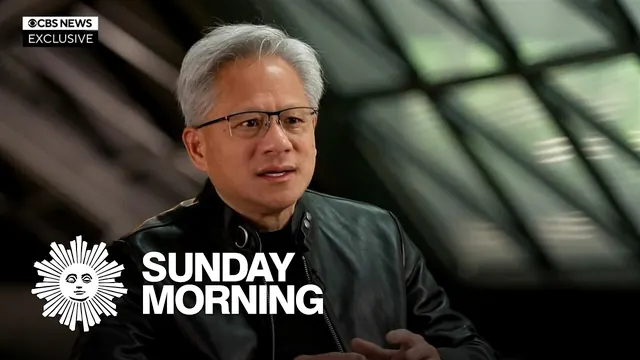
- Elon Musk Musk acknowledges that politics diverted too much attention from his businesses. “Carried away, basically” is his assessment; he says his government involvement should have lasted “a month or two.” Having concluded that …
- The Builders Isaacson challenges the political assumptions accompanying Musk’s technological optimism. Their disagreement centers on empathy, immigration and individual treatment versus cultural generalizations. Musk also acknowledges “too …
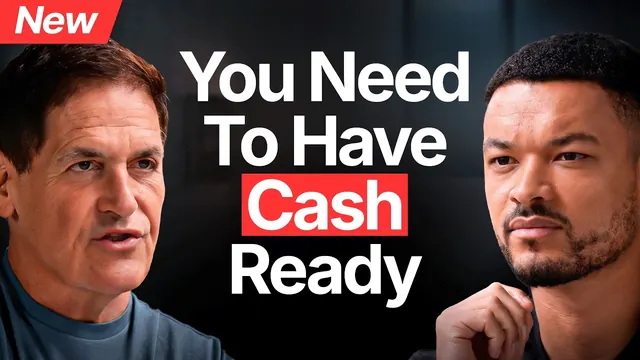
- Elon Musk Musk describes capital as a means of maintaining voting control and financing his preferred future. His wealth is principally ownership in SpaceX and Tesla, with most ultimately intended for a foundation continuing his goals. He also says …
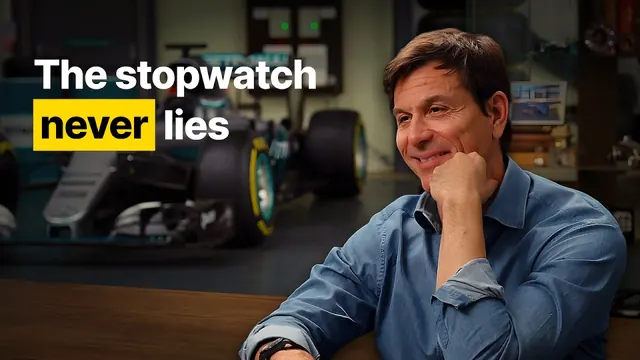
- Toto Wolff Owner control lets Wolff make decisions against a ten-year horizon rather than a manager’s contract. Mercedes helped finance his stake and gave him authority to act outside the corporate hierarchy. Wolff invokes Dietrich Mateschitz’s advice …
- Mercedes evaluates engineering against the car’s performance and people against their contribution to the team. Simulations establish expected lap-time gains, but those gains still require a driver who can extract them. Wolff’s answer to engineers …
- Wolff’s formative investment success depended on selling as well as finding opportunities. After a lucrative SMS-business sale, his CFO challenged valuations disconnected from monetization and compared them with an industrial …
Oct 17, 2026

Oct 16, 2026

- Hard Fork Elizabeth Holmes’s enduring grip begins with the same founder-performance problem that helped Theranos rise: charisma and conviction substituted for verifiable science. Caitlin Roper’s 2013 blood panel looked plausible, yet she never saw the lab or spoke to a lead scientist; John Carreyrou’s suspicion began …
- John Carreyrou The documentary’s access reveals more performance, not an uncontested “real” Holmes. Gone are the black turtlenecks and severe presentation; in their place are beach scenes, children, loosened hair and telegraphed intimacy. …
- Caitlin Roper Sympathy and accountability coexist, which is precisely why *You Can See Everything* works. Roper felt genuine sadness watching a mother approach an 11-year-and-three-month prison sentence, while rejecting Holmes’s attempts to blame …
- John Carreyrou Gender amplified both Holmes’s ascent and the appetite for her punishment. Tech publications and editors wanted rare female-founder examples amid a male-dominated industry, while founder-centric investing helped …
- Erin Griffith Theranos remains relevant because Silicon Valley still cannot articulate a clean boundary between visionary exaggeration and illegal deception. Erin Griffith argues Holmes followed the standard “fake it till you make it” playbook but crossed into lying; Carreyrou calls the line …
Oct 15, 2026

- Lindon Gao Late last year, the team split over whether to prioritize deployment or research, while Lindon was weighed down by the need to be a “CEO who doesn’t make mistakes.” He admits that when he did not know the next strategic step, he followed the market and watched what others were doing, leading to technical …
- A serial founder from the start: at 14, he made tens of thousands of dollars selling in-game items; his previous company, Capa, built cashierless retail carts, struggled to raise after joining YC, and was eventually sold, after which Lindon spent 3 years at Instacart. At the hardest point, he cold-emailed more than 1,000 angel investors and converted just 2. The 4 founders lived together, burned $7,000 a …
- Working on himself is a throughline of the interview: he says he was diagnosed with ankylosing spondylitis at 18 or 19, and later treated the illness as an experiment, looking for patterns by changing his sleep and diet. Reading Meditations, Wang Yangming and others also helped him through the hardest parts of building a company. His motivation has shifted …
Oct 14, 2026
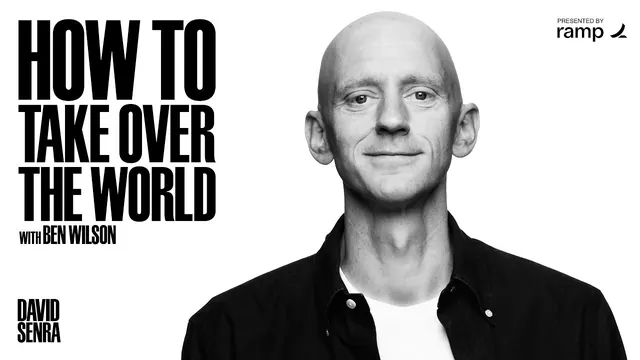
- Ben Wilson The episode’s most portable framework is breaking trade-offs: great outcomes come from deciding what does not matter. Jobs at NeXT answered “all of the priorities” and shipped a late, over-budget, over-engineered flop; ten years later, he accepted an iPod …
- Wilson’s distilled through-lines of great leaders across conquerors, artists and entrepreneurs: vision, communication, focus — with Senra adding obsession as the fourth leg. Wilson’s favorite vision quote is Genghis Khan’s: “Without the vision of a goal, a man cannot hope to manage his own life, let alone the …
- Zeal — Aristotle’s “type of pain” — can motivate achievement: 21-year-old Edison stayed up all night with Faraday’s biography and declared, “I am going to hustle.” Wilson hopes his show’s range of stories will help listeners find someone who feels like a historical mirror: “that person is like me. I …
- Determination and sincere belief matter. Ben says Musk and Jobs weren’t the smartest people at their own companies, but were exceptionally determined: “Optimism, pessimism, screw …
- Clarity of vision makes you easy to help — Daniel Ek on Senra: “You’re very easy to understand, so therefore you’re very easy to help.” Goethe’s line, which Ben connects to Arnold Schwarzenegger’s story, is: “At the moment of commitment, the entire universe conspires to …
Oct 13, 2026
Oct 12, 2026
Oct 9, 2026
Oct 7, 2026
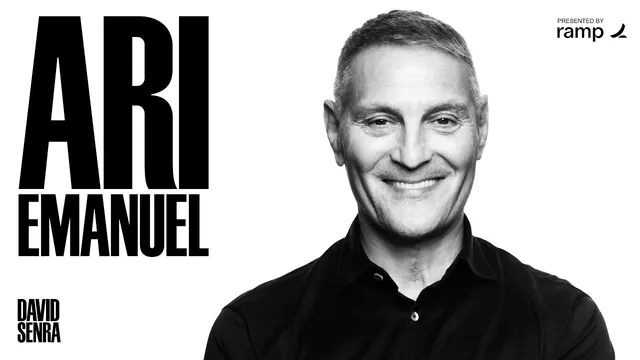
- Ari Emanuel “Roll the calls” is Emanuel’s operating system for manufacturing serendipity and compounding relationships into transactions. A call to Mark Andreessen helped lead to Egon Durban, IMG and ultimately UFC; unsolicited outreach similarly produced relationships with …
- Emanuel concluded that rage and his fixation on control could not take either his company or his life to the heights he wanted. A car accident, physical illness during the UFC transaction, therapy, meditation and 5-MeO gradually weakened his fixation on control and …
- The host’s sharpest challenge is whether greater contentment—and psychedelics in particular—destroys a founder’s productive dissatisfaction; Emanuel’s answer is categorical: “That’s complete nonsense.” He says abandoning legacy anxiety did not mean doing things halfway: he was still awake at 5:00 a.m., working, fundraising and building …
Oct 4, 2026
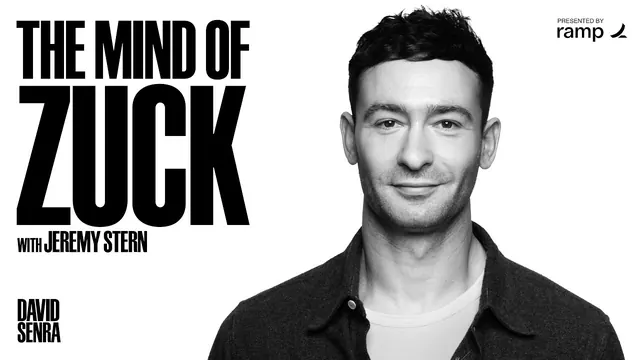
- Jeremy Stern Jeremy Stern’s profiles begin with a question, use a person as the vehicle, and discover their real subject only through immersion. The Zuckerberg piece took five or six months and nearly 40 interviews; Stern’s focus was not a management playbook but to tilt readers’ …
- Zuckerberg’s durable advantage is controlled, methodical compounding rather than theatrical invention. Family, colleagues, critics, rivals, and enemies described someone far more ruthless than outsiders realize yet personally decent—an …
- Zuckerberg’s fascination with Augustus offers a revealing model of founder-controlled empire. He retained Virgil from adolescent Latin classes, once ended meetings with “Carthage must be destroyed” or “Domination!”, and named his …
- Scott Wu combines elite technical ability, natural leadership, and a conspicuous absence of media varnish. Even among mathematics, physics, and programming Olympiad winners, sources described him as the exceptional competitor, coach, and …
- Josh Kushner’s story links entrepreneurial ambition to inherited fear that everything can disappear overnight. His question to Rick Rubin was what to do if the “magic” behind Thrive vanished; Stern read that vulnerability through a family history …
- Stern’s own distinctive contribution is applying literary ambition to the people currently shaping American life. He does not frame his work as a mine for reusable tactics, preferring to reveal singular lives, their self-protective myths, and their …
Oct 2, 2026
Sep 30, 2026
Sep 28, 2026
Sep 27, 2026
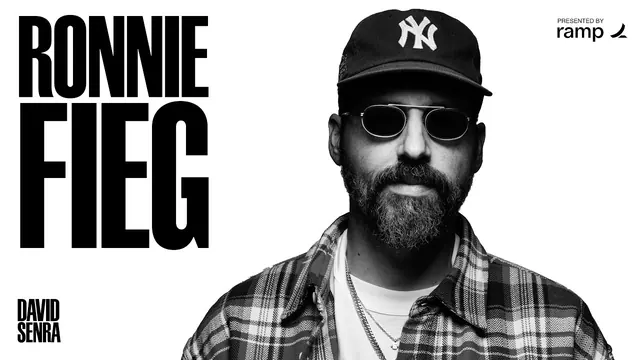
- Ronnie Fieg Fieg's organizing thesis is that his favorite entrepreneurs "can't work for money" — passion has to precede the P&L. He traces his own version to age 13, when he refused his cousin David Z's Bar Mitzvah cash envelope with "keep the envelope... I want a job," and to the Steve Jobs/Nike story Senra retells — "you also make a lot of junk... just get rid of the junk" — which Senra uses …
- The product machine is founder-embodied to an unusual degree: 5,000+ styles a year, and until recently Fieg spent 4 hours a week as the brand's fit model. Roughly 20 people attend each fitting where live decisions get made — his counter to an industry that re-cuts fabrics without re-fitting. …

Sep 26, 2026

- Parag Agrawal Speaker 1’s path into product began with IRC and engineering. He spent his early teens learning cybersecurity, cryptography, networking, and video encoding from strangers online, then joined Snap in …
- Hiring advice is split across the labeled speakers: Parag emphasizes examining what candidates have built and avoiding paid mercenaries; Speaker 1’s quickfire answer identifies slow removal of poor culture fits as the biggest founder mistake. A Snap Games acquisition example involved Crash Club, an Australian studio, and a flight to Brisbane the next day.
Sep 25, 2026
Sep 24, 2026
Sep 23, 2026
Sep 20, 2026
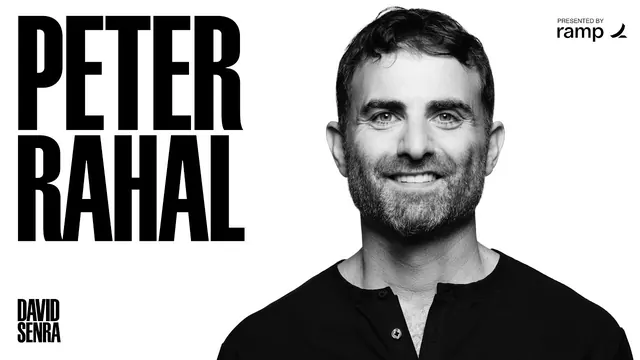
- Peter Rahal His post-RXBAR investing chapter is a cautionary tale on founder-to-allocator transitions. He analyzed garbage recycling, synthetic biology, and other CPG ideas but kept quitting because his only gear is total commitment: "my …
- The psychological engine is unresolved resentment from a dyslexic childhood—overhearing teachers ask "Is Peter stupid?"—which he calls "a tattoo" that psychedelic therapy could not remove. His thesis is that resentment and anger are productive when channeled into building, destructive when unfocused. Senra describes a similarly …