Specialized Edge AI Reshaping Defense Tech
Analyzing autonomous edge decision-making systems and procurement shifts in the defense industry.
1 sources · ↑1.5×Voices in this topic
All paragraphs
Oct 27, 2026

Oct 4, 2026

Oct 3, 2026

Sep 30, 2026
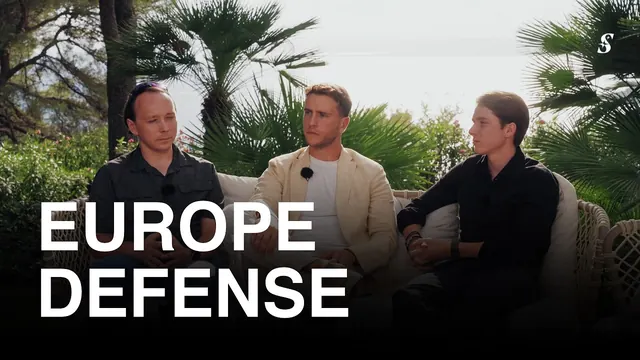
- Sourcery Ukraine made production scale indispensable alongside technology. George Hadjiminas says decades of European underspending left weaknesses in the ability to manufacture and supply at scale. Aistis Šimaitis …
- Bruno Wejchert The manufacturing layer, not another neo-prime, is framed as the clearest white space. Bruno Wejchert points to Europe’s fragmented supplier base and component lead times measured in years, which help explain why primes can …
- Aistis Šimaitis Autonomous warfare forces military component costs down as deployment volumes rise. Aistis’s example is a military radio that could acceptably cost $30,000 four years ago but cannot support fleets ranging from hundreds to …
- Sourcery The winning model combines technological leadership with industrial competence. George calls adoption an evolution rather than a revolution: “Prototypes don’t fight wars,” so advanced systems still require supply chains …
- Europe’s weakness is less technological inferiority than institutional fragmentation. George sees capabilities broadly comparable with the US, but Europe has more protected national champions and fewer startup-to-scale-up …
- Bruno Wejchert Government procurement can separate funded prototypes from durable defense businesses. Bruno says startups financed with only $5 million or $10 million may have superior products yet lack the hundreds of millions, workforce, …
Sep 28, 2026

- Moonshots Anduril’s wildfire XPRIZE win shows how its autonomy workflow applies to civil emergencies, where response time changes the engineering. The $2.2 million award—$1 million from Lockheed—involved detection, classification, false-positive filtering, agent selection, and delivery. …
- Palmer Luckey Front-line autonomy is operationally unavoidable because centralized intelligence creates communications and command-center vulnerabilities. Links can be jammed, intercepted, or broken, and adversaries can target the control center; underwater platforms may not connect at all. …
- Today’s general foundation models are largely the wrong technology for Anduril’s weapons stack. Luckey calls them non-deterministic and difficult to verify: text-in/text-out models do not classify raw radar data or process passive …
- Moonshots A universal defense robot loses precisely where specialization commands the highest premium. A humanoid that is 5% worse may still win commercially by serving factories, hospitals, and restaurants, but a consistent 5% combat …
- Palmer Luckey Anduril will use humanoids but will not build them, because Luckey believes other teams are already doing that well. Humanoids could operate legacy radars worth millions or hundreds of millions of dollars without exposing people, yet building them would add …
- Moonshots Anduril’s business model attacks a procurement market where, a few years ago, five companies received roughly 80% of major defense acquisition programs. It self-funds products and then sells working systems, converting successful program managers into repeat buyers. The founding pitch was …